


|
|
|
History > Cold War > Korean War 1950-1953
warning: graphic violence / distressing
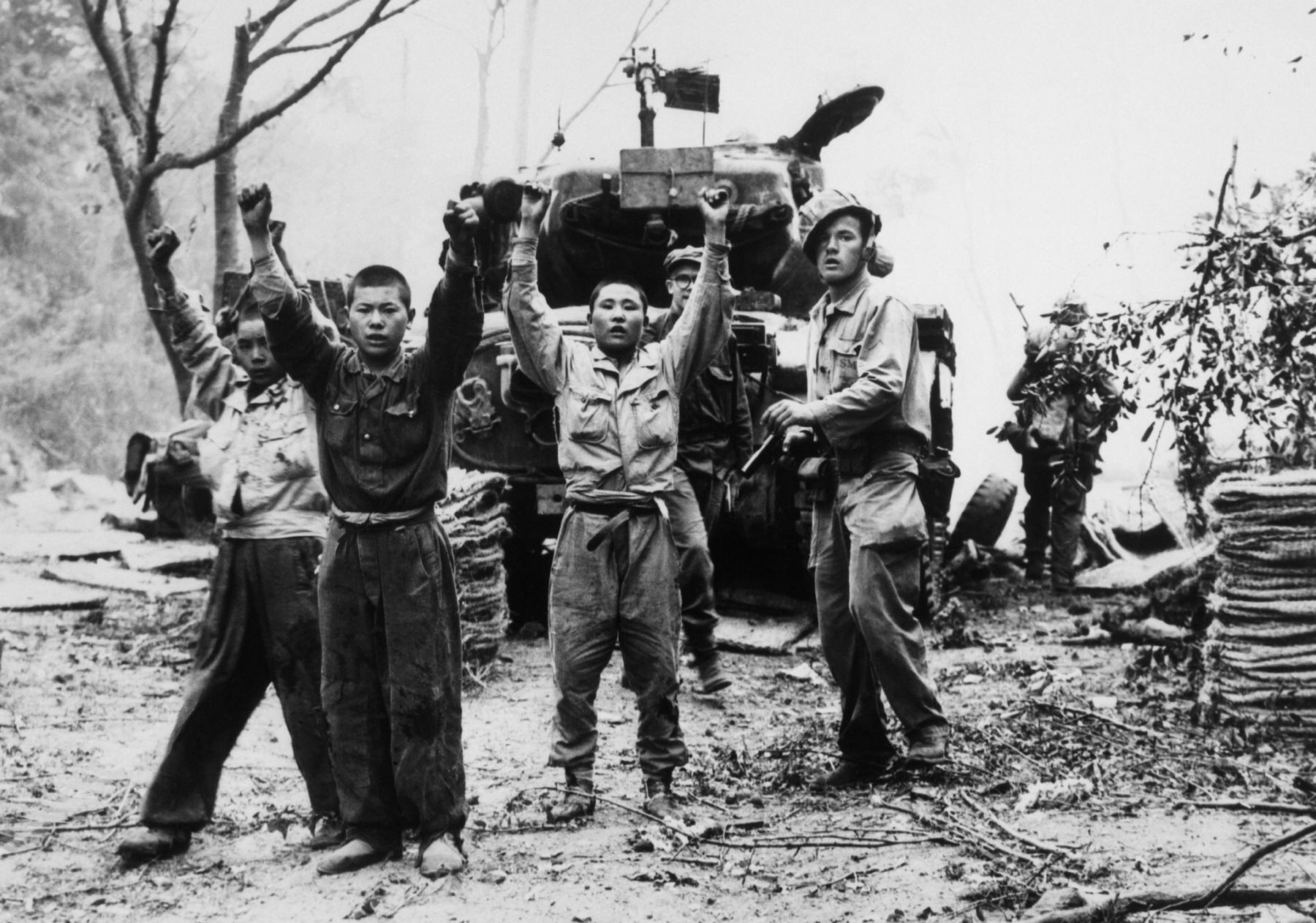
A United States Marine with North Korean prisoners of war in 1953.
Photograph: Universal History Archive/UIG via Getty Images
Rocket Man Knows Better NYT SEPT. 23, 2017
https://www.nytimes.com/2017/09/23/
Kenneth Hill Rowe 1932-2023
Two months after the Korean War armistice, Lt. No Kum-Sok of the North Korean Air Force broke away from his 16-plane patrol near the nation’s capital, Pyongyang; streaked undetected into South Korea in his Soviet-built MIG jet fighter; and landed at a military airfield manned by the United States Air Force and airmen from allied nations.
A veteran of more than 100 combat flights, the 21-year-old pilot climbed out of his silver swept-wing plane, which was emblazoned with a red star and bristling with machine guns, as astonished airmen surrounded him.
He had fulfilled his dream of fleeing Communism, and he brought a gift for the United States Air Force: — the first intact MIG to fall into its hands.
A year later, he had a new name — Kenneth Rowe — and a new country, having begun life in America as a college student.
https://www.nytimes.com/2023/01/05/
https://www.nytimes.com/2023/01/05/
Korean War
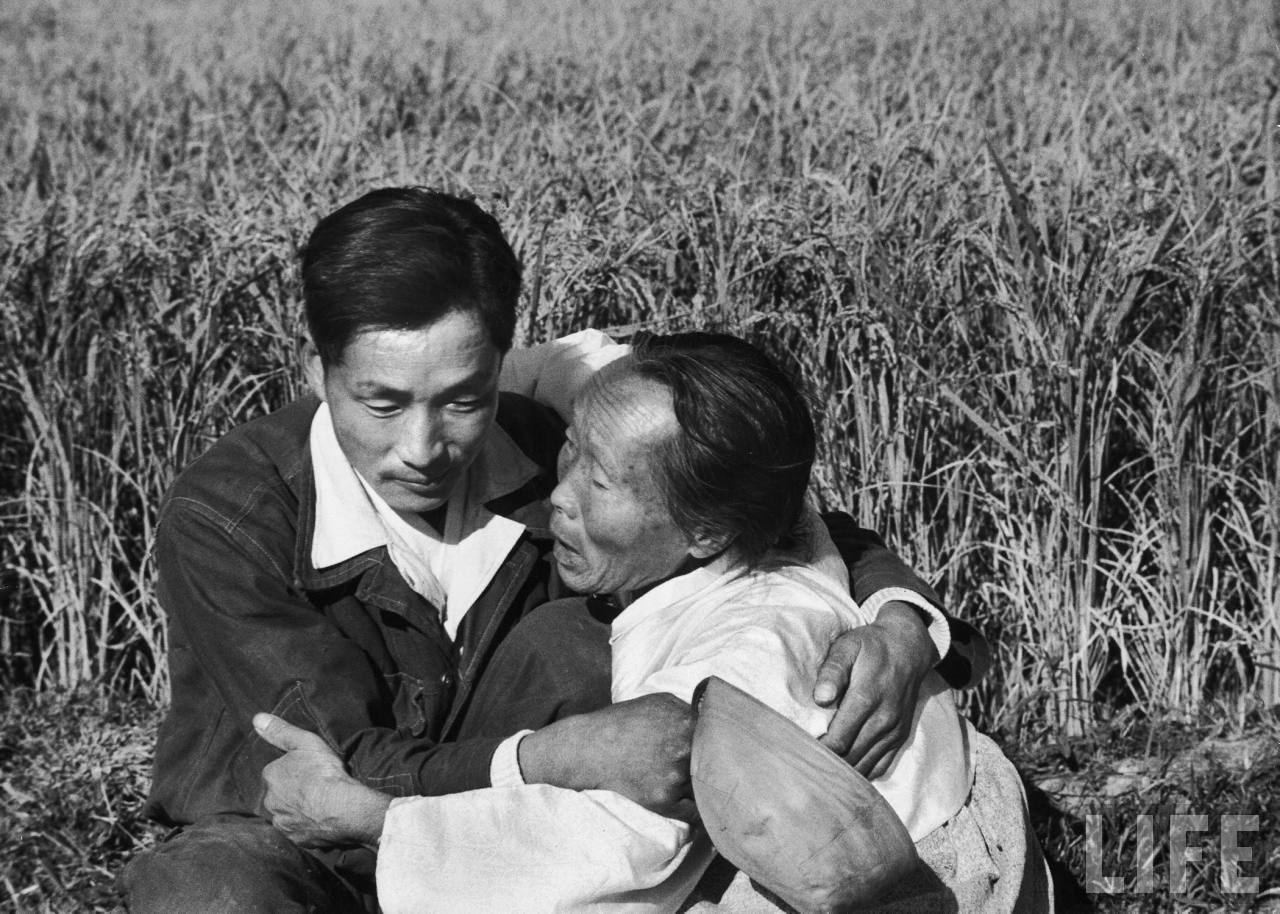
Date taken: 1952
Photograph: Michael Rougier
Life Images http://images.google.com/hosted/life/9bd30a5c6184a88b.html
Operation Area In Korea
Ex-Communist guerrilla Nim Churl Jin, upon his return, after two years in the hills with guerrilla forces, is greeted by his old mother who clutches him while screaming "Is it a dream? You cannot be my son. My son is dead?," in rice field outside his fami
Anglonautes's note : no other letters after "fami"
Location: Cholla-Namando, Korea (South)
Date taken: November 1952
Photograph: Margaret Bourke-White
Life Images http://images.google.com/hosted/life/3865670a81ab8c54.html http://images.google.com/hosted/life/l?imgurl=3865670a81ab8c54
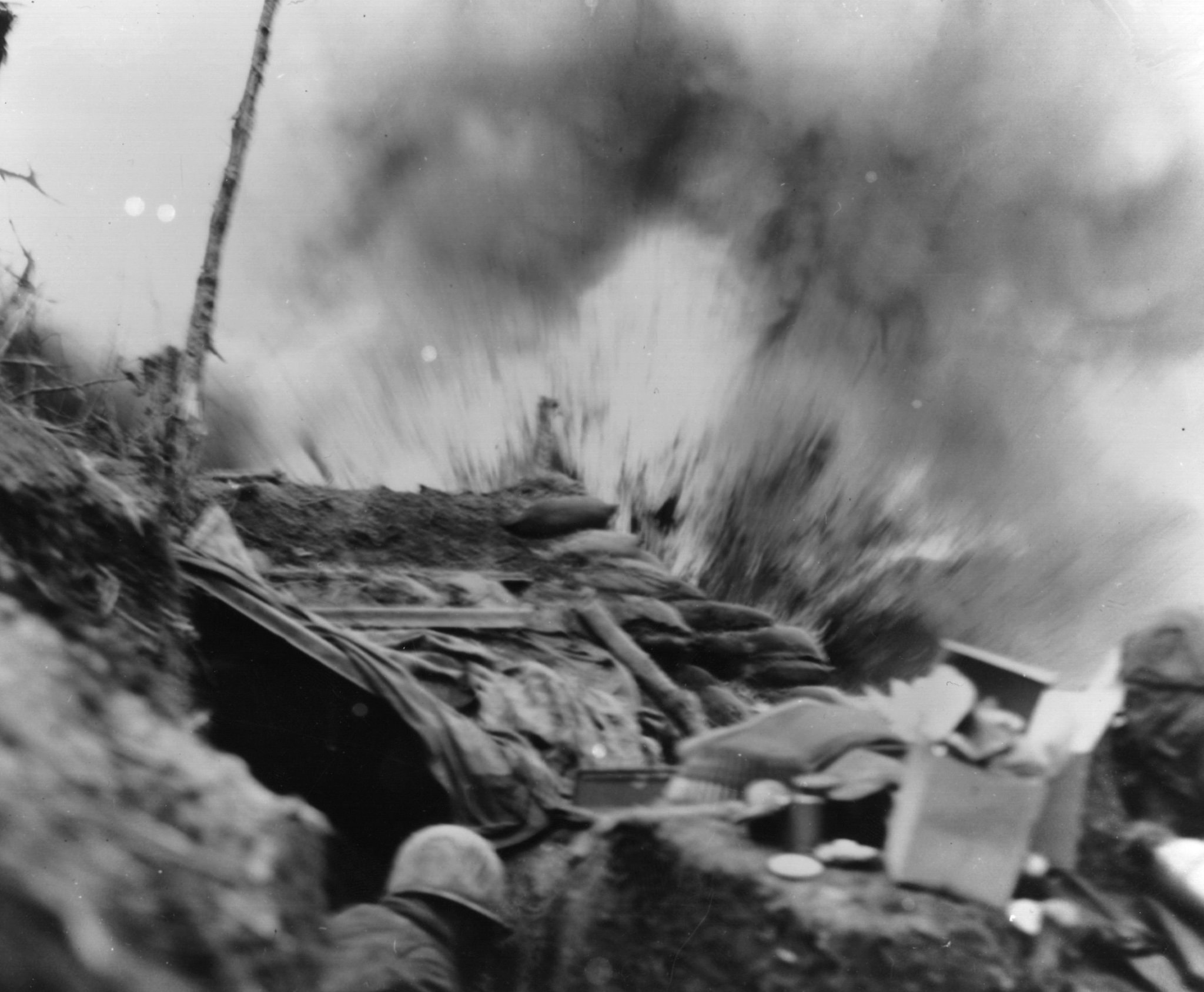
A shell exploding near a United States Marine position in April 1952.
Photograph: Keystone, via Getty Images
The Korean War in Pictures NYT April 25, 2018
https://www.nytimes.com/2018/04/25/
Soldiers in 1951, during the Korean War.
Photograph: Photo12/Universal Images Group, via Getty Images
How Will the War in Ukraine End? Maybe Like 1953 Korea. NYT Feb. 24, 2023 1:00 a.m. ET
https://www.nytimes.com/2023/02/24/
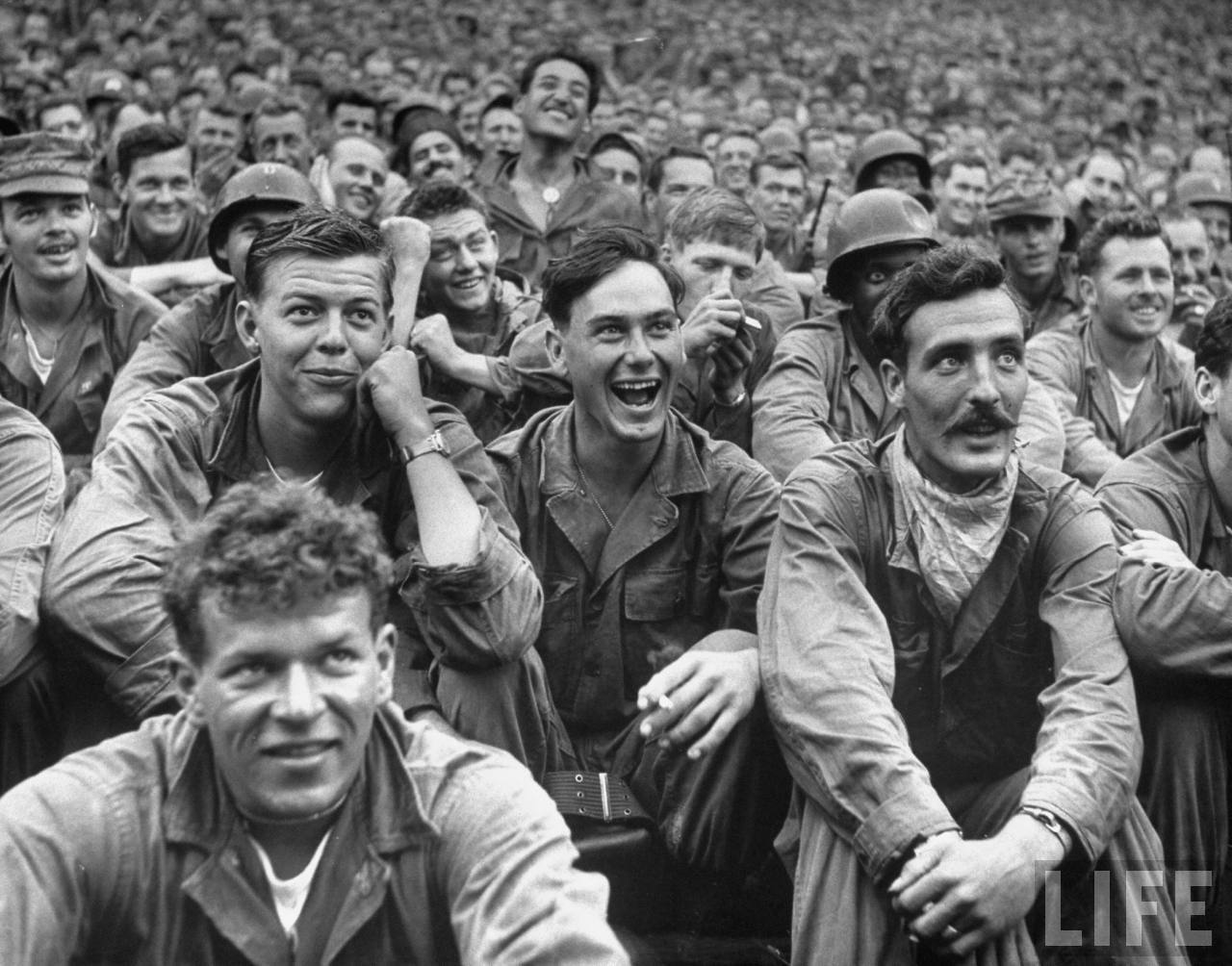
The Jack Benny Show in Korea with Errol Flynn.
Location: Korea
Date taken: July 1951
Photograph: Michael Rougier
Life Images http://images.google.com/hosted/life/l?imgurl=f55e447c87ed10b5
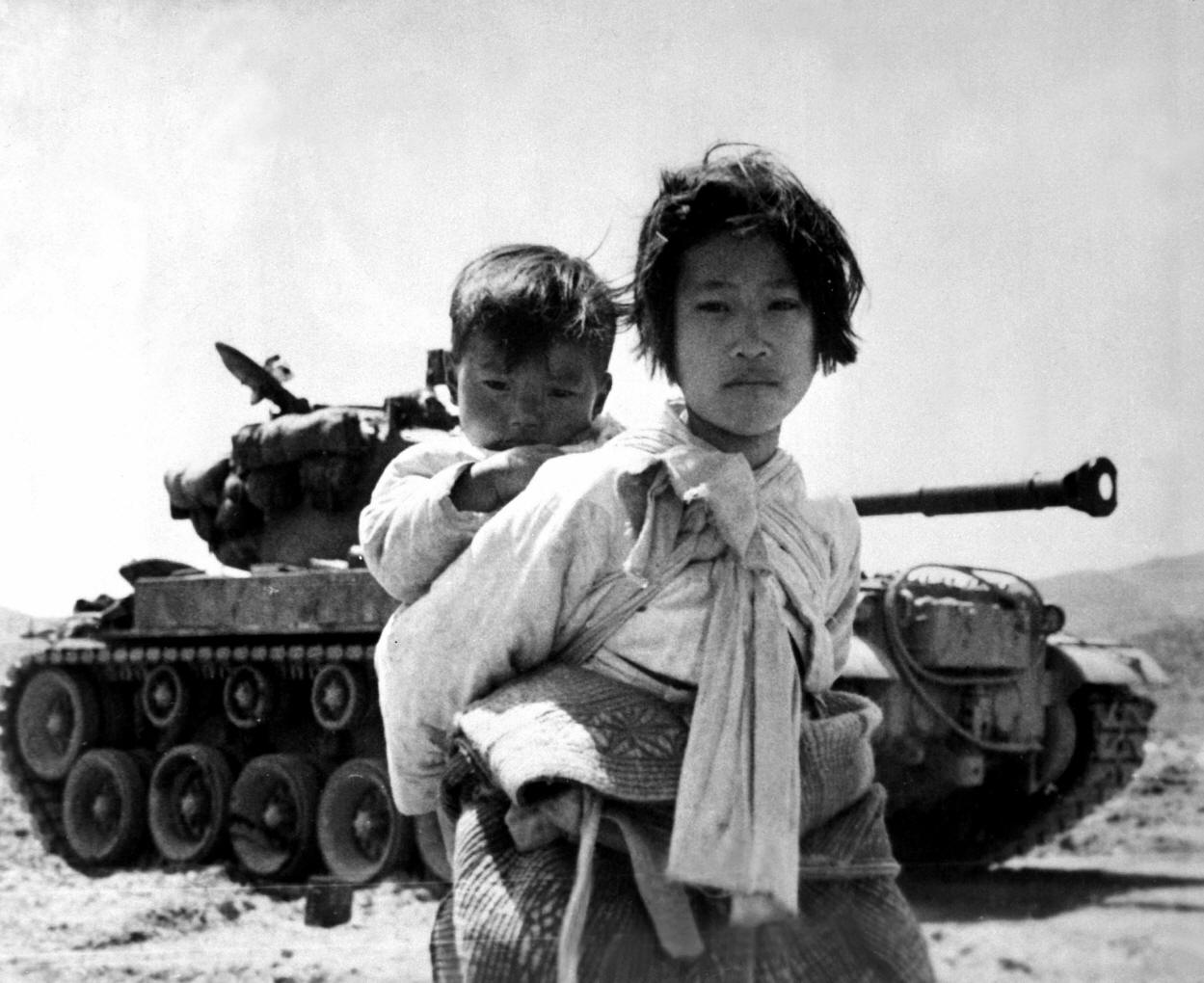
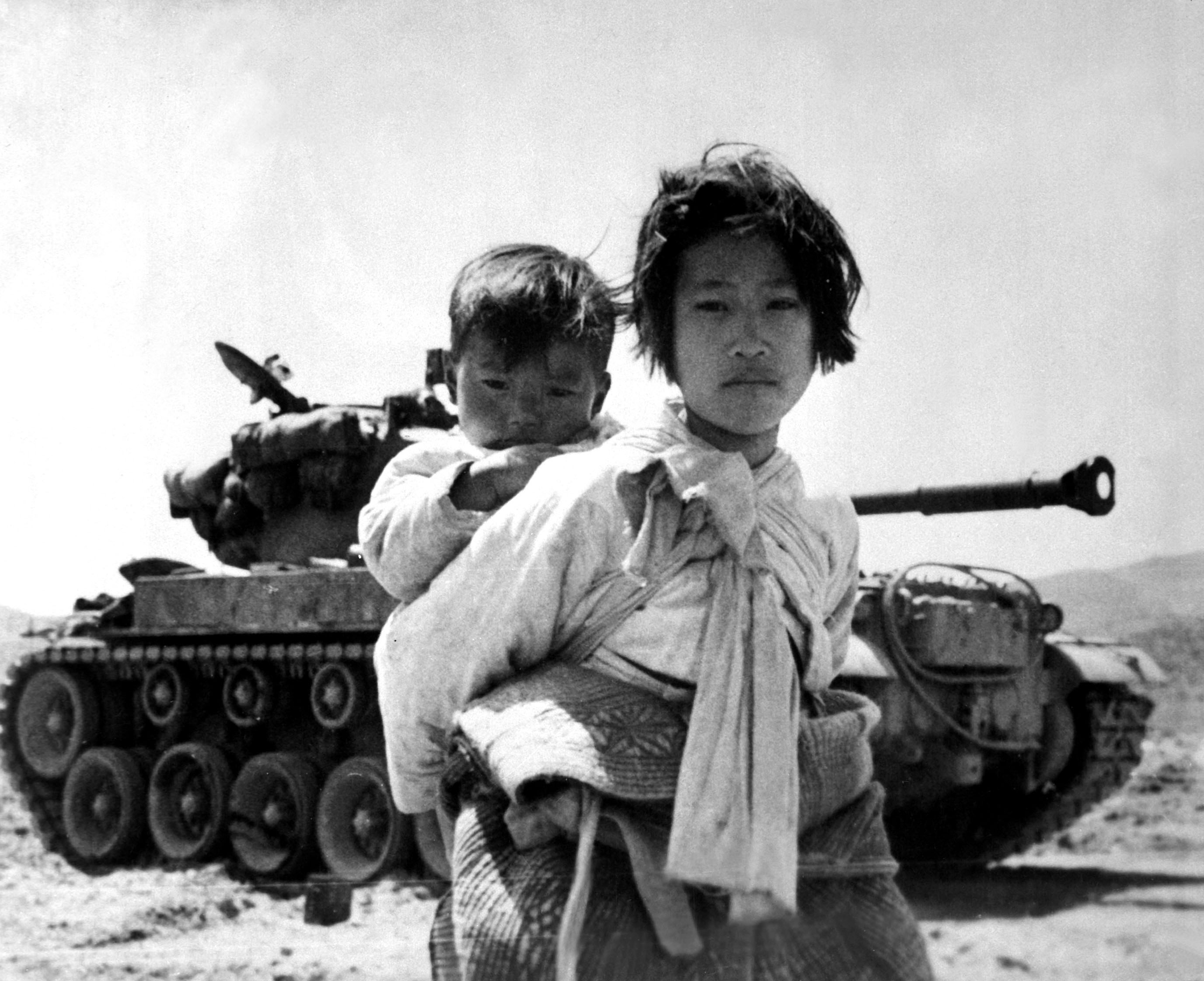
With her brother on her back a war weary Korean girl tiredly trudges by a stalled M-26 tank, at Haengju, Korea. June 9, 1951.
Maj. R.V. Spencer, UAF. (Navy) NARA FILE #: 080-G-429691 WAR & CONFLICT BOOK #: 1485 U.S. Army Korea Media Center official Korean War online image archive Cleared for public release. U.S. Army Korea - Installation Management Command
Date 9 June 1951(1951-06-09) http://www.flickr.com/photos/imcomkorea/sets/72157607808414225/
Author Maj. R.V. Spencer (Reusing this image) PD-USGov-Military http://upload.wikimedia.org/wikipedia/commons/a/af/KoreanWarRefugeeWithBaby.jpg http://en.wikipedia.org/wiki/File:KoreanWarRefugeeWithBaby.jpg http://www.flickr.com/photos/imcomkorea/sets/72157607808414225/
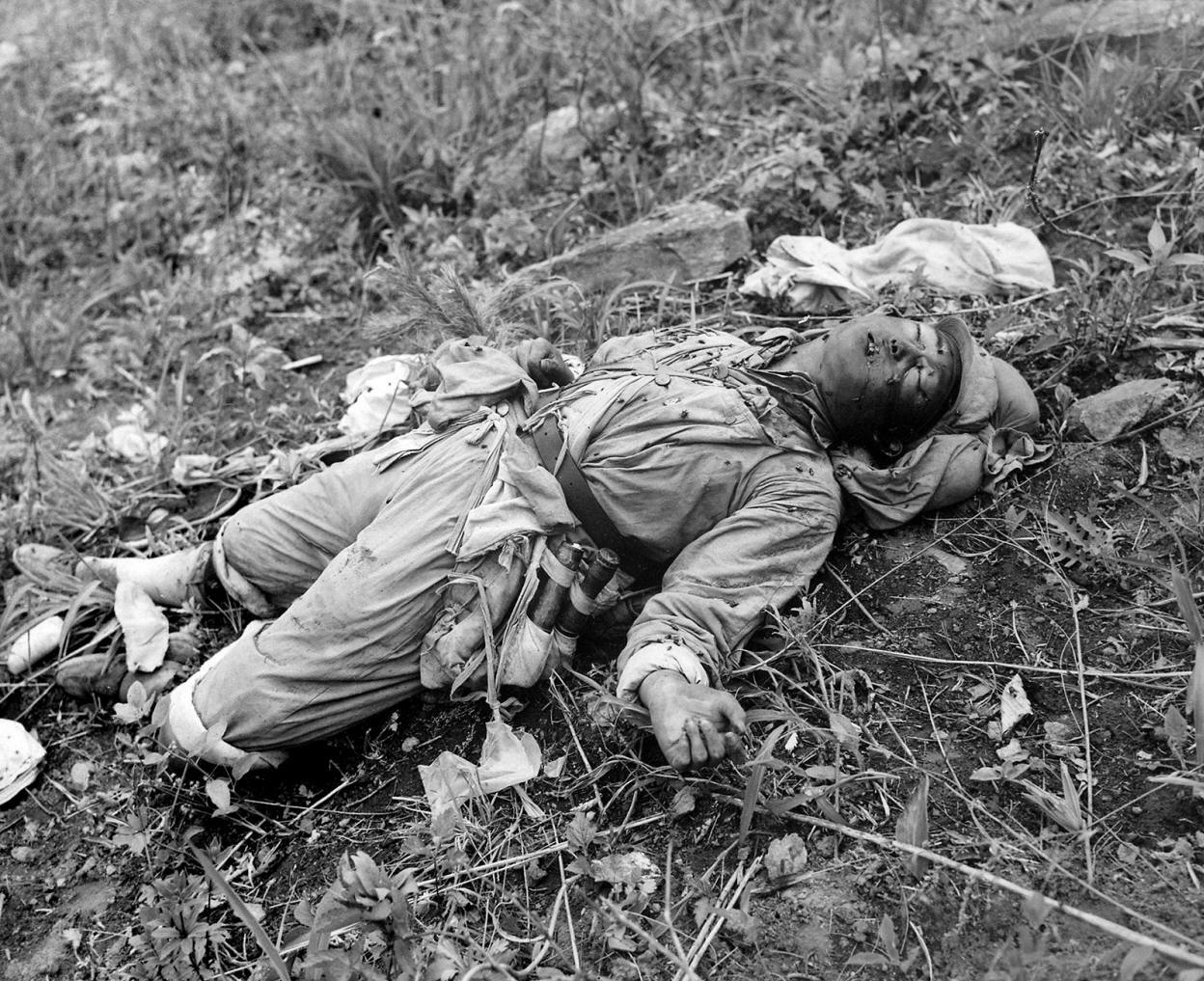
A Chinese soldier, killed by Marines of the 1st Marine Division in Korea during attack on Hill 1051, on Kari San Mountain
Source: US Archiv ARCWEB ARC Identifier: 520794 NARA National Archives and Records Administration]
Date: 05/23/1951
Author: N H McMasters (US Dept of Defense) http://en.wikipedia.org/wiki/Image:DeadchinesesoldierEdit.jpg http://en.wikipedia.org/wiki/Korean_War
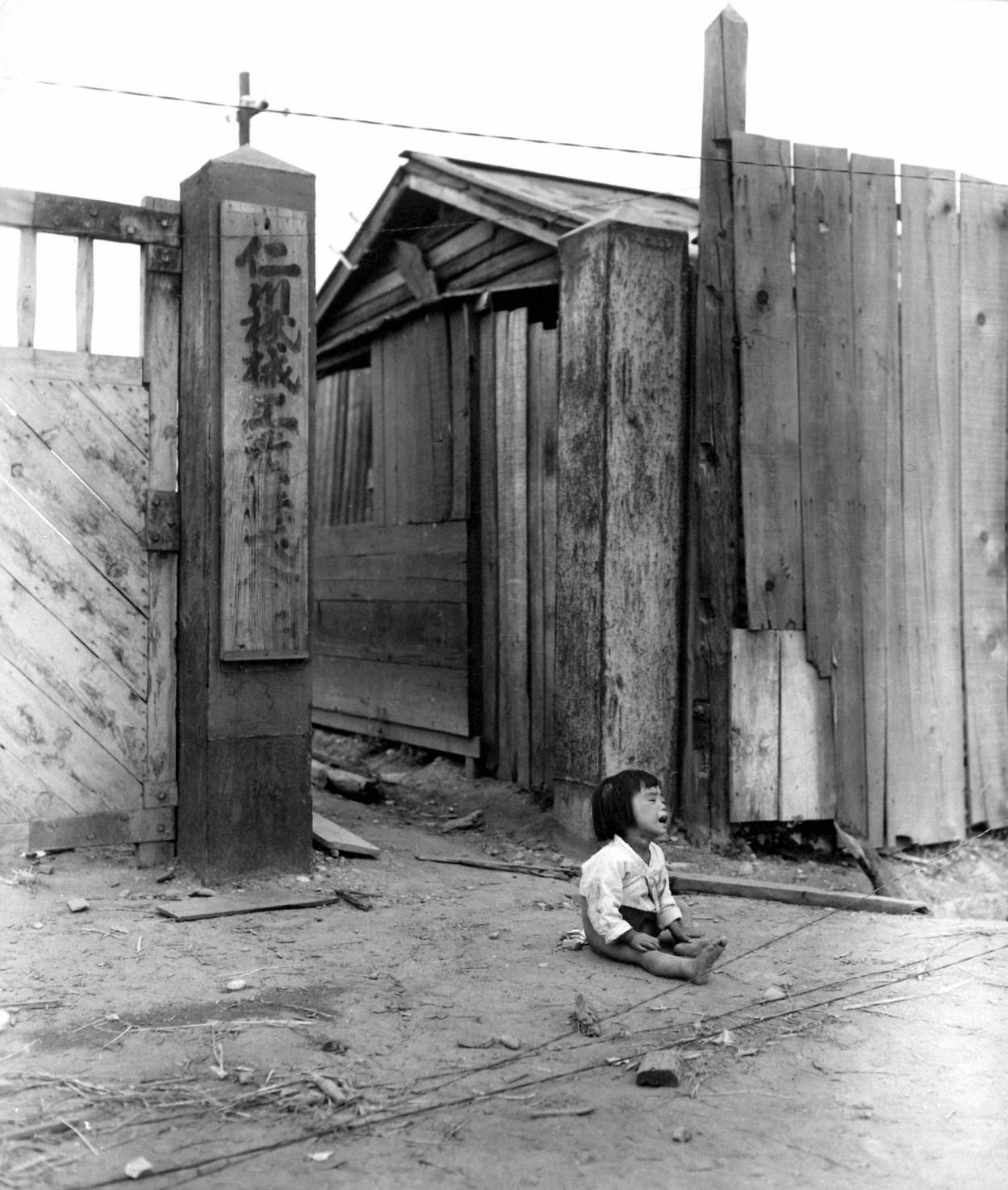
A small South Korean child sits alone in the street, after elements of the 1st Marine Div. and South Korean Marines invaded the city of Inchon, in an offensive launched against the North Korean forces in that area.
September 16, 1950.
Pfc. Ronald L. Hancock. (Army)
NARA FILE #: 111-SC-348594
U.S. Army official Korean War image archive
16 September 1950(1950-09-16)
Source U.S. Army Author Pfc. Ronald L. Hancock. (Army) Permission (Reusing this image) PD-USGov-Military-Army http://en.wikipedia.org/wiki/File:KoreanWarDamage4.jpg http://en.wikipedia.org/wiki/Korean_War http://www.flickr.com/photos/imcomkorea/sets/72157607808414225/
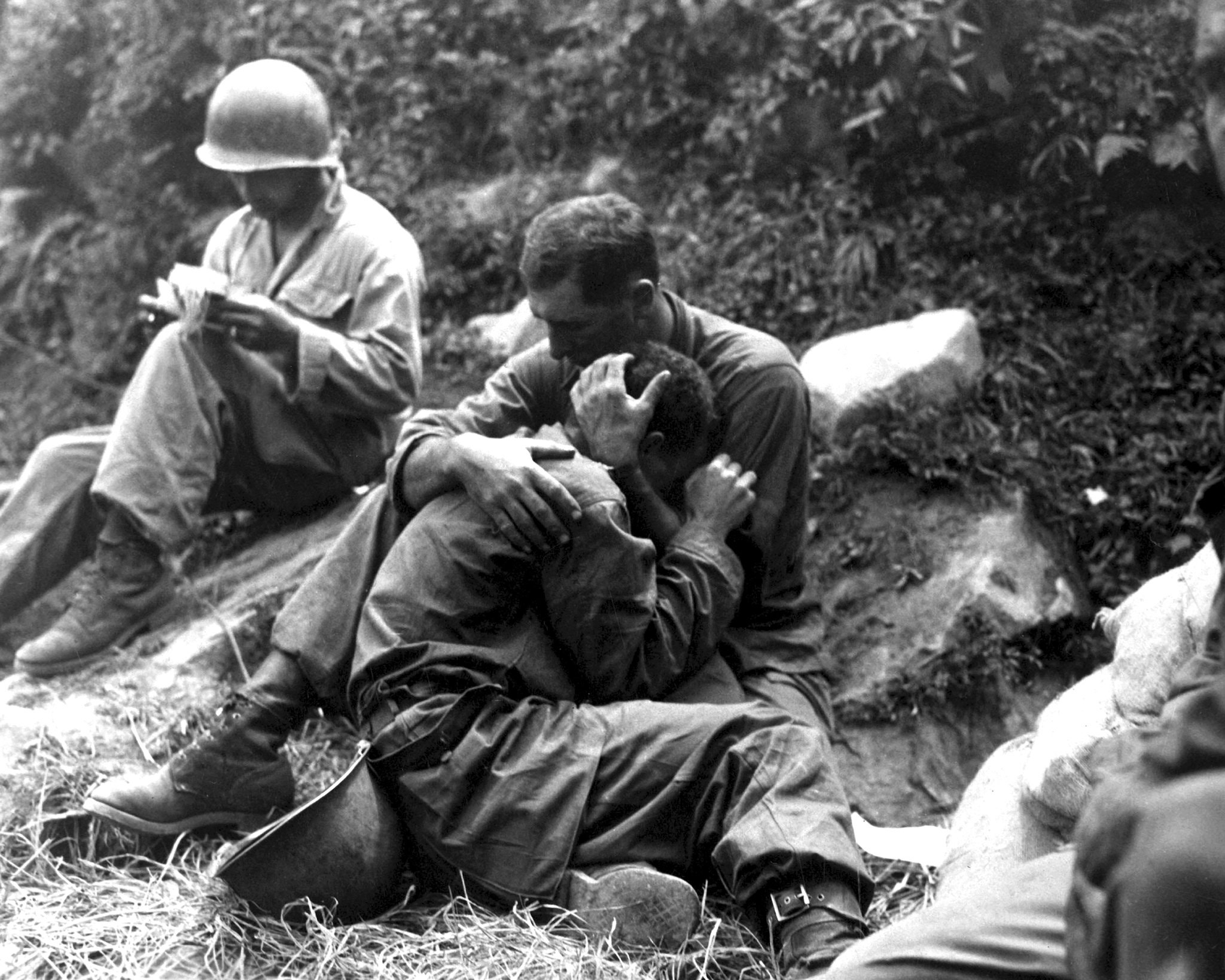
An American soldier comforting a fellow infantryman whose close friend had been killed in action in South Korea in August 1950.
Photograph: United States Army, via Getty Images
The Korean War in Pictures The New York Times April 25, 2018
https://www.nytimes.com/2018/04/25/
A grief stricken American infantryman whose friend has been killed in action is comforted by another soldier.
In the background a corpsman methodically fills out casualty tags, Haktong-ni area, Korea. August 28, 1950.
Sfc. Al Chang. (Army) U.S. Army Korea Media Center official Korean War online video archive 28 August 1950
(1950-08-28)
Source: U.S. Army http://en.wikipedia.org/wiki/File:KoreanWarFallenSoldier1.jpg http://en.wikipedia.org/wiki/Korean_War http://www.flickr.com/photos/imcomkorea/sets/72157607808414225/
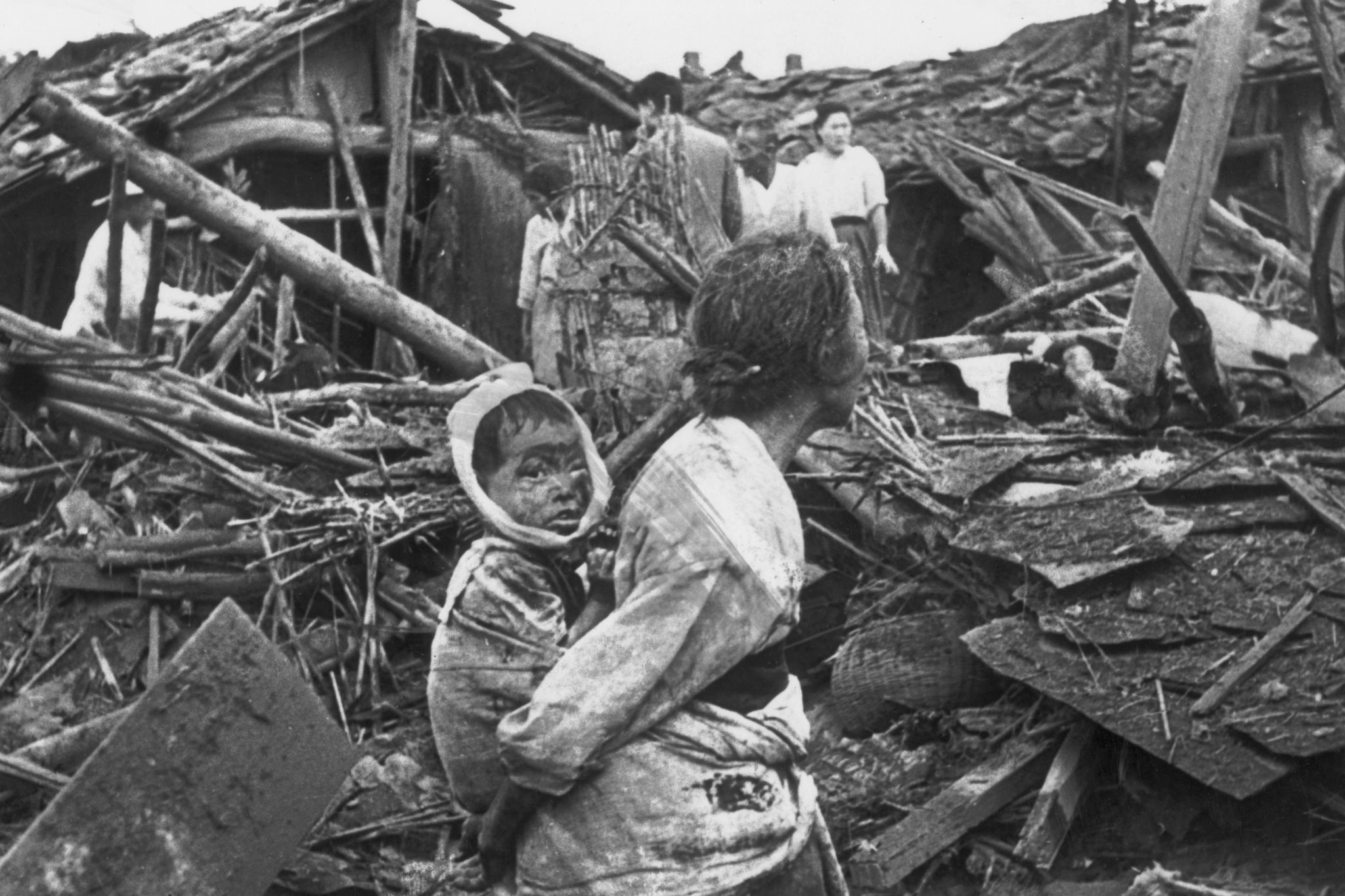
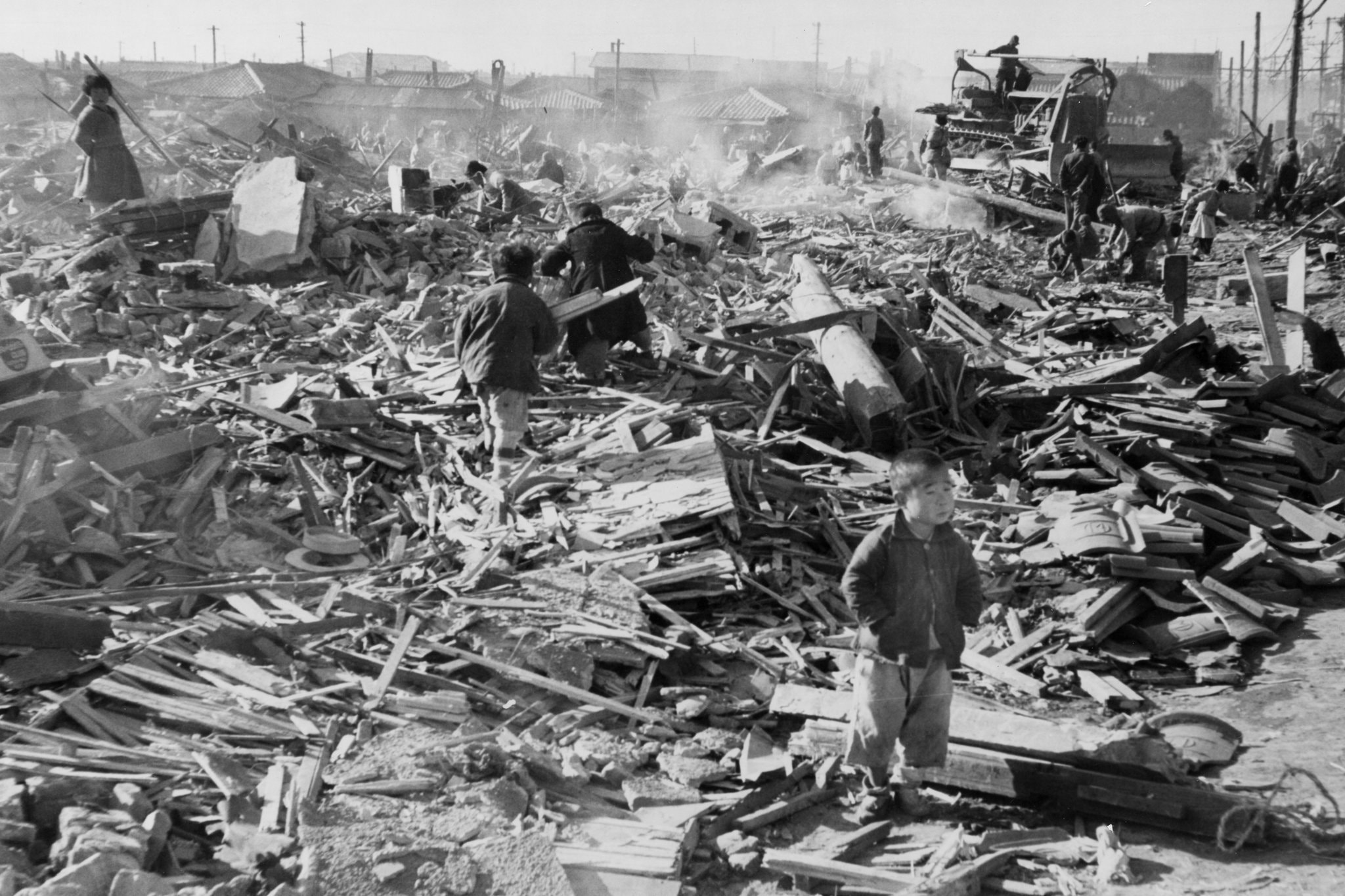
civilian casualties
North Korean civilians in the aftermath of a bombing by American planes over Pyongyang.
Roughly 25 percent of the North’s population was believed to have been killed in the war.
Photograph: via Getty Images
The Korean War in Pictures The New York Times April 25, 2018
https://www.nytimes.com/2018/04/25/
A Korean boy amid the ruins of his home, all that remained after Americans bulldozed a path through civilian homes in Hungnam, North Korea, in December 1950.
Photograph: David Douglas Duncan
The Korean War in Pictures The New York Times April 25, 2018
https://www.nytimes.com/2018/04/25/
Why Hasn’t the Korean War Ended? It’s Been 65 Years. NYT 24 April 2018
Why Hasn’t the Korean War Ended? It’s Been 65 Years. Video The New York Times 24 April 2018
After six decades, the Korean War is technically still not over.
Here’s what happened – and why it still matters.
YouTube https://www.youtube.com/watch?v=t06Rljkovtc
Chung Eun-yong 1923-2014
Over the years Mr. Chung (...) amassed evidence that American troops had systematically killed more than 100, and possibly as many as 400, civilian refugees early in the Korean War near a railroad bridge outside the South Korean village of No Gun Ri.
He sent more than a dozen petitions to the American government demanding an apology and compensation.
https://www.nytimes.com/2014/08/24/world/asia/
https://www.nytimes.com/2014/08/24/
James Lamar Stone 1922-2012
Col. James L. Stone (...) as an Army platoon leader on a desolate hilltop facing overwhelming Chinese forces during the Korean War rallied his men, then stayed behind to cover their retreat despite being wounded three times, actions for which he earned the Medal of Honor
https://www.nytimes.com/2012/11/14/
https://www.nytimes.com/2012/11/14/
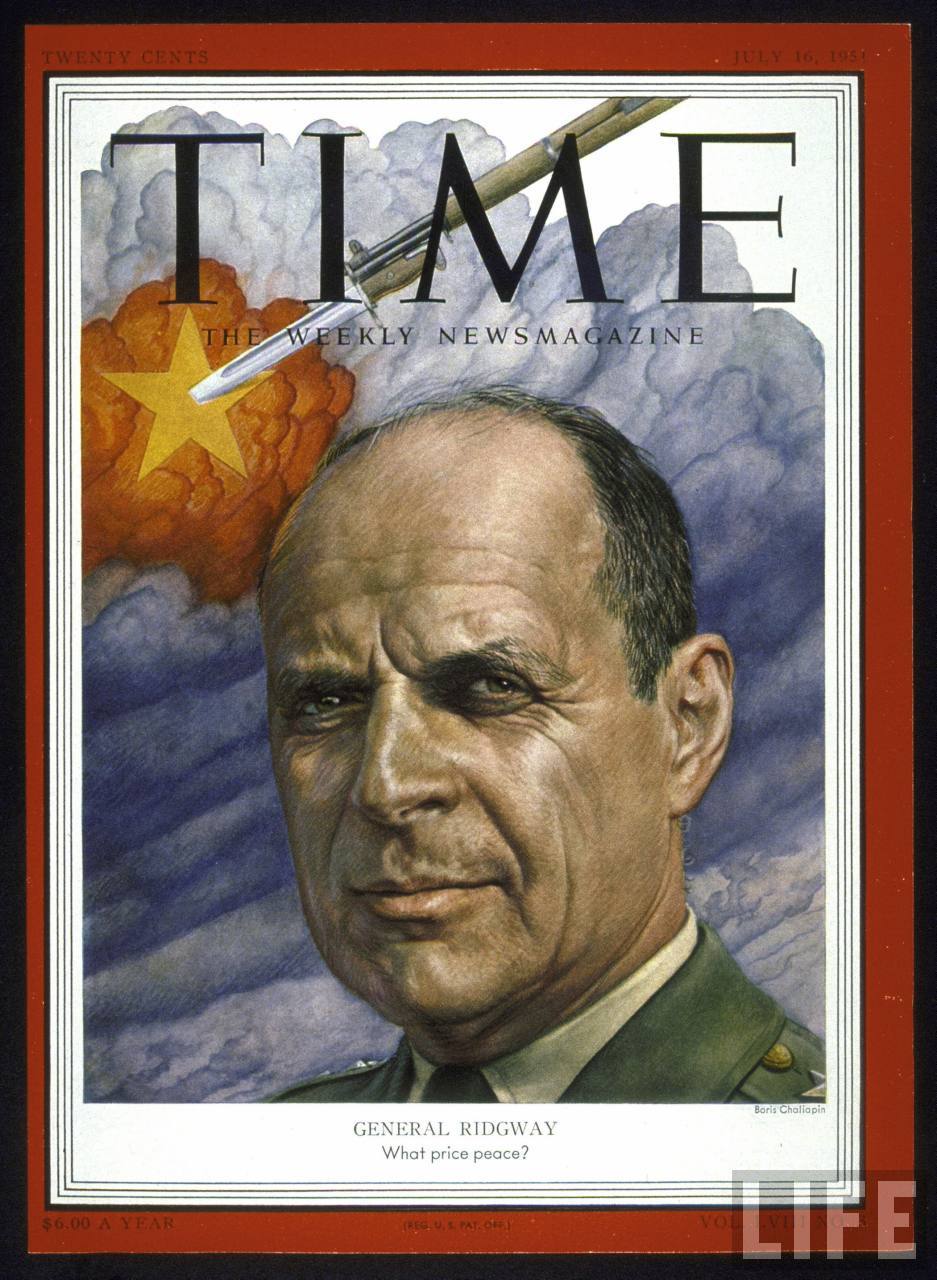
11 April 1951
MacArthur fired - Ridgway takes over
Time Covers - The 50S Time cover: 07-16-1951 of Matthew B. Ridgway.
Life Images http://images.google.com/hosted/life/l?imgurl=13d7c69fcb4ce2f9
US President Harry S Truman dismisses General Douglas MacArthur as commanderof United Nations and US forces in the Far East after disagreements over foreign policy in Korea. http://news.bbc.co.uk/onthisday/hi/dates/stories/april/11/newsid_3708000/3708197.stm
http://news.bbc.co.uk/onthisday/hi/dates/stories/april/11/
https://www.nytimes.com/1993/07/27/
22-25 April 1951
Battle of the Imjin River
the Battle of the Imjin (22-25 April 1951) was the bloodiest engagement endured by the British Army since the Second World War.
For three days the 29th British Independent Infantry Brigade Group thwarted the Chinese Spring Offensive. https://www.nam.ac.uk/explore/battle-imjin
https://en.wikipedia.org/wiki/
https://www.nam.ac.uk/explore/battle-imjin
According to the South Korean government's Truth and Reconciliation Commission,
(...)
on Jan. 19, 1951, at least 51 villagers, including 16 children, were killed when U.S. planes napalmed Sansong, a village 160 kilometers, or 100 miles, southeast of Seoul.
A day later, it said, at least 167 villagers, more than half of them women, were burned to death or asphyxiated in Tanyang, 35 kilometers north of Sansong, when U.S. planes dropped napalm at the entrance of a cave filled with refugees. https://www.nytimes.com/2008/07/21/world/asia/21iht-incheon.1.14657938.html
https://www.nytimes.com/2008/07/21/
27 November and 13 December 1950
Battle of Chosin Reservoir
more than 100,000 Chinese soldiers swarmed far fewer American Marines and soldiers in subzero temperatures on treacherous terrain in one of the fiercest battles of the Korean War
(...)
American soldiers (were) engaged in hand-to-hand combat with Chinese soldiers sent by Mao Zedong to fortify the weak North Korean army.
https://www.nytimes.com/2013/07/30/
The Battle of Chosin Reservoir also known as the Chosin Reservoir Campaign or the Changjin Lake Campaign was a decisive battle in the Korean War.
Shortly after the People's Republic of China entered the conflict, the People's Volunteer Army 9th Army infiltrated the northeastern part of North Korea and surprised the US X Corps at the Chosin Reservoir area.
A brutal 17 day battle in freezing weather soon followed.
In the period between 27 November and 13 December 1950, 30,000 United Nations (UN) troops (nicknamed "The Chosin Few") under the command of Major General Edward Almond were encircled by approximately 67,000 Chinese troops under the command of Song Shi-Lun.
Although Chinese troops managed to surround and outnumber the UN forces, the UN forces broke out of the encirclement while inflicting crippling losses on the Chinese.
The evacuation of the X Corps from the port of Hungnam marked the complete withdrawal of UN troops from North Korea. http://en.wikipedia.org/wiki/Battle_of_Chosin_Reservoir
https://en.wikipedia.org/wiki/
https://www.npr.org/2020/12/04/
https://www.npr.org/2020/11/27/
https://www.nytimes.com/2013/07/30/
September 1950
China's intervention
In mid-September, General MacArthur brought off a masterstroke by landing two divisions 240km (150 miles) in the enemy rear at the port of Inchon.
Their communications cut, and under heavy aerial bombardment, the North Koreans broke and fled back north;
MacArthur ordered a hot pursuit which led across the 38th parallel and deep into North Korea.
As the victorious UN forces drew near to the Manchurian border, there were ominous signals from Peking that communist China would intervene to defend its territory.
In mid-October, MacArthur met President Harry Truman on Wake Island in their first encounter to assure him that a massive UN offensive was about to conclude the war victoriously by Christmas.
No sooner had this been launched in November than the Chinese unleashed their armies.
The UN forces recoiled in disorder and, by the new year, were defending a line well to the south of Seoul, the capital of South Korea.
https://www.bbc.co.uk/history/worldwars/coldwar/
https://www.bbc.co.uk/history/worldwars/coldwar/
https://www.pbs.org/wnet/wideangle/uncategorized/
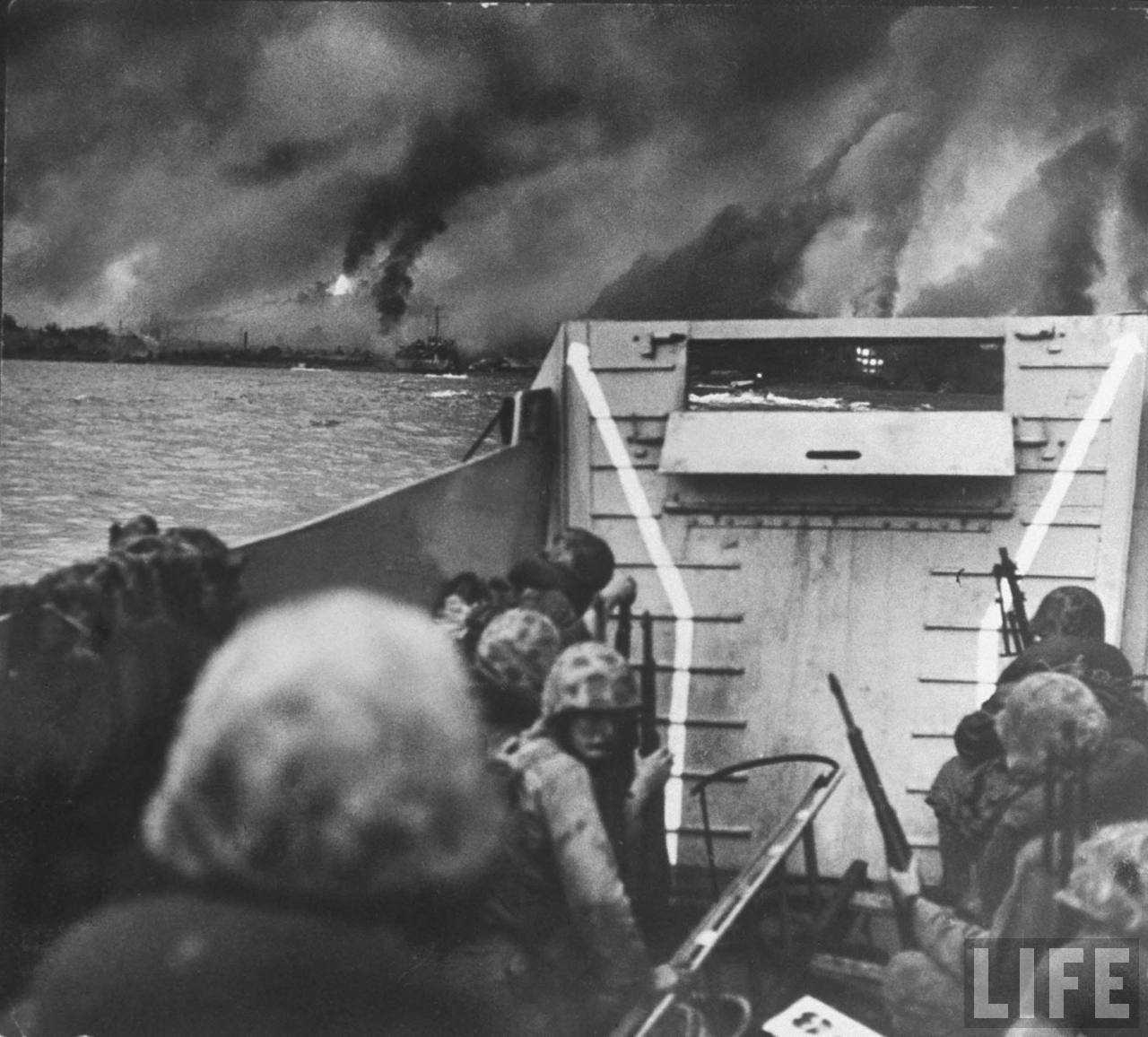
Inchon invasion September 1950
U.S. Marines landing at Inchon as battle rages during Korean Civil War.
Location: Inchon, Korea
Date taken: 1950
Photograph: Hank Walker
Life Images http://images.google.com/hosted/life/l?imgurl=e2ad4b4852402298
The Incheon landing helped UN troops recapture Seoul and drive back the North Koreans.
But the tide turned again when the Chinese entered the war.
https://www.nytimes.com/2008/07/21/
http://news.bbc.co.uk/onthisday/hi/dates/stories/september/15/
https://www.nytimes.com/2008/07/21/
On Sept. 10, 1950, five days before the Incheon landing, 43 U.S. warplanes swarmed over Wolmi, dropping 93 napalm tanks to "burn out" its eastern slope, according to declassified U.S. military documents reviewed by South Korean government investigators.
https://www.nytimes.com/2008/07/21/
https://www.nytimes.com/2008/07/21/
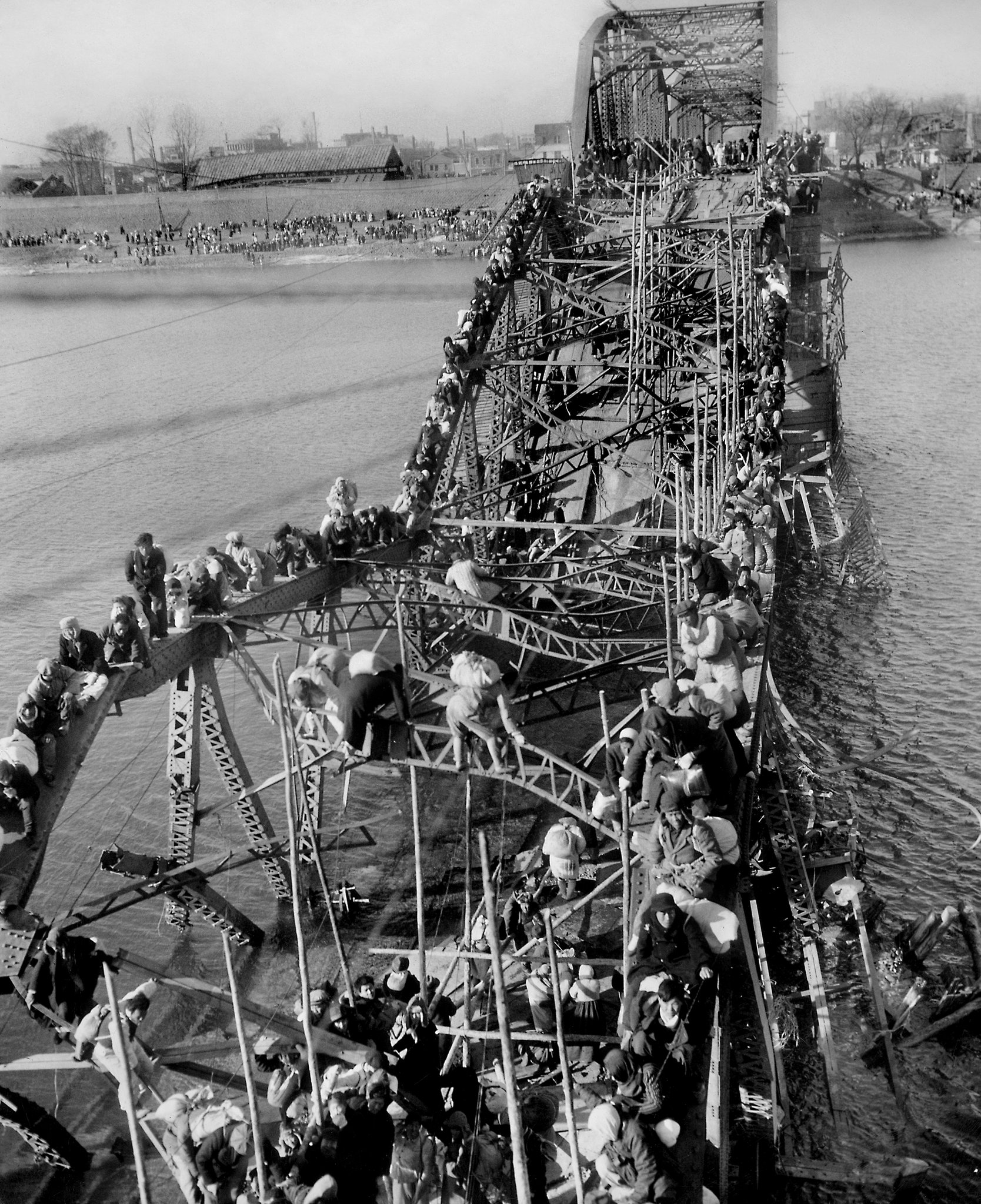
Mr. Desfor climbed a 50-foot-high section of a bombed bridge along the Taedong River in North Korea to photograph fleeing refugees.
"Mr. Desfor volunteered to cover the Korean War for the news service when the North invaded the South in June 1950.
He parachuted into North Korea with United States troops and retreated with them after forces from the North, joined by the Chinese, pushed south.
He was in a Jeep near the North Korean capital, Pyongyang, when he spotted a bridge along the Taedong River that had been bombed.
Thousands of refugees were lined up on the north bank waiting their turn to cross the river. “We came across this incredible sight,”
Mr. Desfor said in 1997 for an A.P. oral history. “All of these people who are literally crawling through these broken-down girders of the bridge.
They were in and out of it, on top, underneath, and just barely escaping the freezing water.”
“My hands got so cold I could barely trip the shutter on my camera,” he said. “I couldn’t even finish a full pack of film. It was just that cold.”"
Max Desfor, 104, War Photographer at Midcentury, Is Dead Mr. Desfor’s photo of hundreds of Korean War refugees crawling across a damaged bridge in 1950 helped win him a Pulitzer Prize. By THE ASSOCIATED PRESS NYT FEB. 21, 2018
https://www.nytimes.com/2018/02/21/
Related In this December 4, 1950 photo, residents from Pyongyang, North Korea, and refugees from other areas crawl perilously over shattered girders of the city's bridge, as they flee south across the Taedong River to escape the advance of Chinese Communist troops.
https://www.theatlantic.com/photo/2016/02/
The war breaks out in June 1950 with a Communist invasion from the north
https://www.pbs.org/wnet/wideangle/uncategorized/
https://www.nytimes.com/2018/02/21/
Korean War 1950-1953
The Korean War began when North Korean troops pushed into South Korea on June 25, 1950, and it lasted until 1953.
But experts said the military conflict could not be properly understood
without considering its
historical context.
Korea, a Japanese colony from 1910 until 1945, was occupied by the United States and the Soviet Union at the end of World War II.
The United States proposed temporarily dividing the country along the 38th Parallel as a way to maintain its influence on the peninsula, which bordered Russia, said Charles K. Armstrong, a professor of Korean history at Columbia University.
“A divided Korea was something unprecedented,” he said.
But the divide lasted in part because of competing visions among Koreans for the country’s future.
“Fundamentally it was a civil war, fought over issues going back into Korea’s colonial experience,” said Bruce Cumings, a professor of history at the University of Chicago.
In 1948, the American-backed, anti-communist southern administration, based in Seoul, declared itself the Republic of Korea.
It was led by Syngman Rhee, who lived in exile in the United States for many years and was installed as the South Korean leader by the Office of Strategic Services, a predecessor to the Central Intelligence Agency, Professor Cumings said.
Soon after, the Soviet-backed, communist northern administration, based in Pyongyang, declared itself the Democratic People’s Republic of Korea.
Its leader was Kim Il-sung, who fought alongside communist forces during the Chinese civil war and was the grandfather of North Korea’s current dictator, Kim Jong-un.
Each regime was unstable, rejected the legitimacy of the other and considered itself to be Korea’s sole rightful ruler.
Border skirmishes between the two were frequent before the Korean War began.
The war pitted South Korea and the United States, fighting under the auspices of the United Nations, against North Korea and China.
Other nations contributed troops, too, but American forces did most of the fighting.
“The South Korean Army virtually collapsed” at the start of the war, Professor Cumings said.
The Soviet Union supported North Korea at the beginning of the war, giving it arms, tanks and strategic advice.
But China soon emerged as its most important ally, sending soldiers to fight in Korea as a way to keep the conflict away from its border.
The Chinese leader, Mao Zedong, also saw China’s participation in the war as a way to thank Korean Communists who fought in the Chinese civil war, Professor Cumings said.
“There was a lot of field contact between American and Chinese forces,” Professor Armstrong said.
“In a sense, this was the first and only war between China and the United States, so far.”
The war devastated Korea.
Historians said that between three million and four million people were killed, although firm figures have never been produced, particularly by the North Korean government.
As many as 70 percent of the dead may have been civilians.
Destruction was particularly acute in the North, which was subjected to years of American bombing, including with napalm.
Roughly 25 percent of its prewar population was killed, Professor Cumings said, and many of the survivors lived underground by the war’s end.
“North Korea was flattened,” he said.
“The North Koreans see the American bombing as a Holocaust, and every child is taught about it.”
Damage was also widespread in South Korea, where Seoul changed hands four times.
But most combat took place in the northern or central parts of the peninsula around the current Demilitarized Zone, which divides the countries,
Professor Cumings said.
https://www.nytimes.com/2018/01/01/
https://www.nytimes.com/topic/subject/korean-war http://news.bbc.co.uk/2/shared/spl/hi/asia_pac/03/the_korean_war/html/
https://www.bbc.co.uk/history/worldwars/coldwar/ https://www.monde-diplomatique.fr/1999/07/ENDICOTT/3116 https://www.archives.gov/education/lessons/korean-conflict https://www.flickr.com/photos/imcomkorea/sets/72157607808414225/
https://www.nytimes.com/2023/07/27/
https://www.nytimes.com/2023/02/24/
https://www.nytimes.com/2021/09/06/
https://www.npr.org/2021/05/19/
https://www.npr.org/2021/03/06/
https://www.npr.org/2020/06/25/
https://www.npr.org/2018/07/27/
https://www.nytimes.com/2018/04/25/
https://www.nytimes.com/video/world/asia/
https://www.youtube.com/
https://www.nytimes.com/2018/02/21/
https://www.nytimes.com/2018/01/01/
https://www.nytimes.com/2014/03/17/
http://www.nytimes.com/2010/06/25/opinion/25KoreaIntro.html
http://www.nytimes.com/2008/07/21/world/asia/21iht-incheon.1.14657938.html
http://www.nytimes.com/2007/09/23/books/review/Frankel-t.html
https://www.nytimes.com/1950/11/30/
https://www.nytimes.com/1950/11/24/
https://www.nytimes.com/1950/09/22/
https://www.theguardian.com/world/1950/jun/26/northkorea1
https://www.theguardian.com/world/1950/jun/26/
https://www.nytimes.com/1950/06/26/
https://www.nytimes.com/1950/06/25/
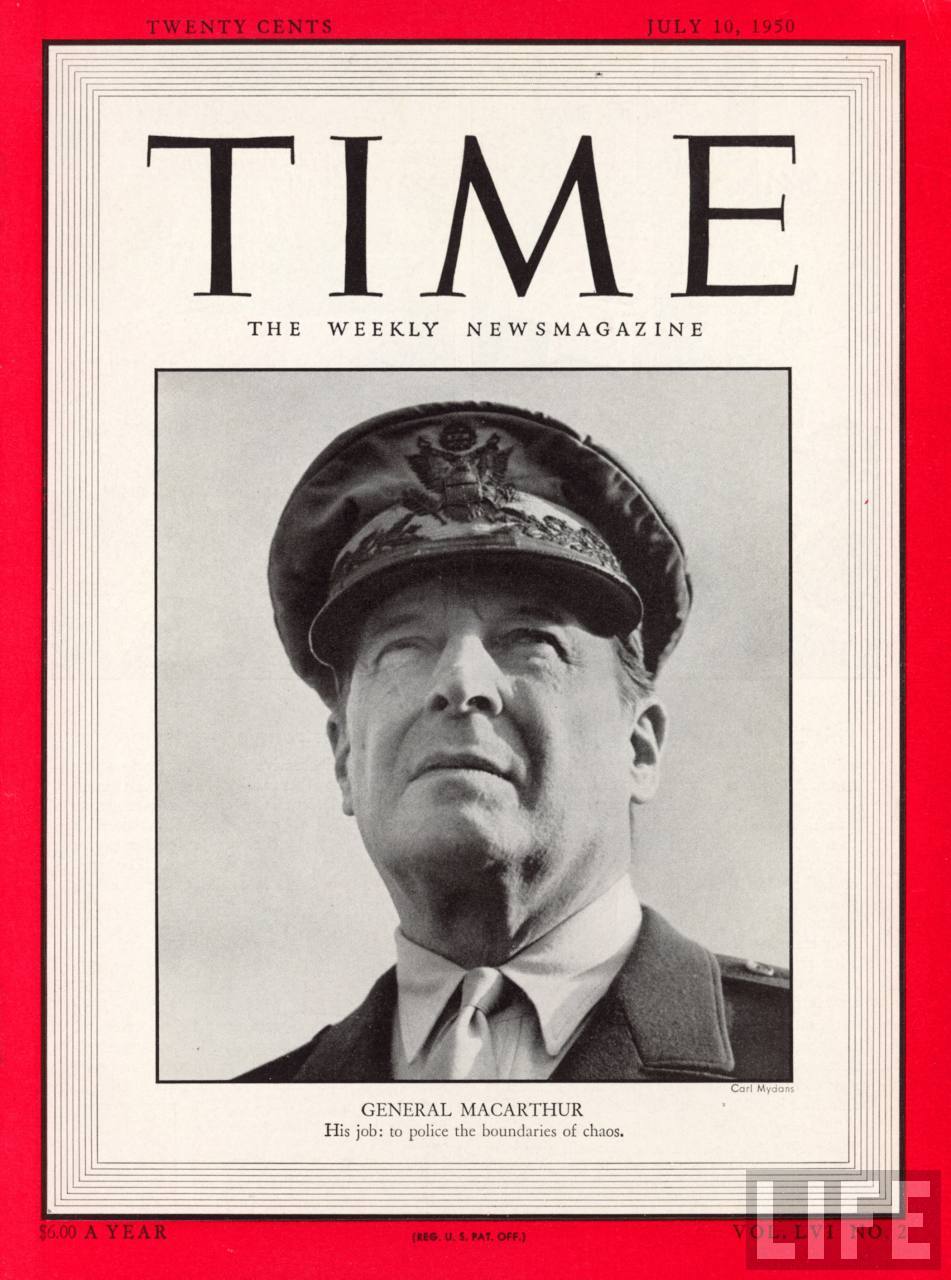
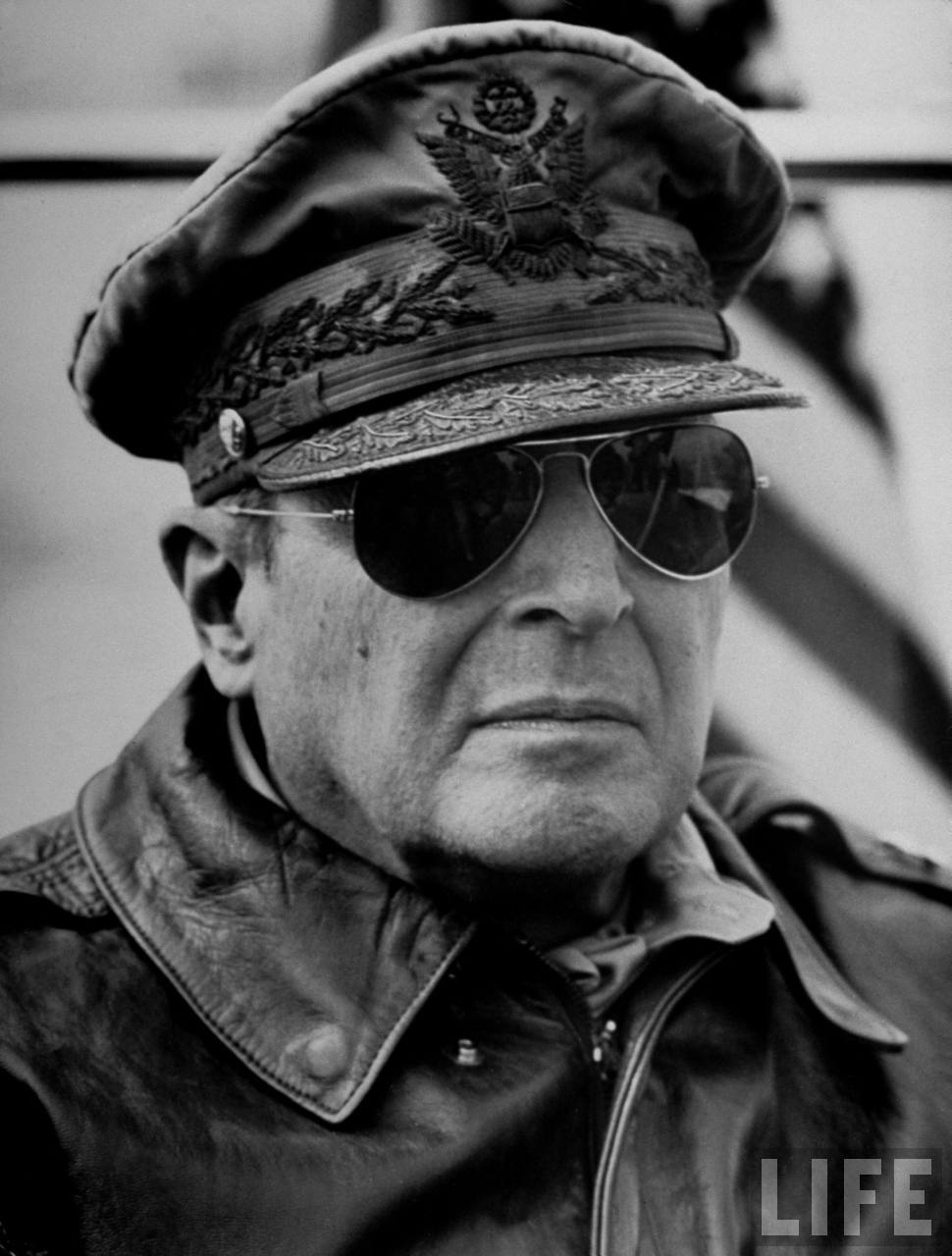
General Douglas MacArthur 1880-1964
Time Covers - The 50S TIME cover 07-10-1950 General Douglas MacArthur.
Date taken: July 10, 1950
Photograph: Carl Mydans
Life Images
Inchon Landing, Korea
Gen. Douglas MacArthur, on the bridge of flagship U.S.S. Mount McKinley, watching his X Corps (two regiments of the 1st Marine Division) making assault landing on beachhead.
Location: Inchon, Korea (South)
Date taken: September 1950
Photograph: Carl Mydans
Life Images http://images.google.com/hosted/life/l?imgurl=e4e13c0c122e6c1d - broken link
https://en.wikipedia.org/wiki/
http://news.bbc.co.uk/onthisday/hi/dates/stories/april/11/
https://www.nytimes.com/2008/07/21/
https://www.nytimes.com/1964/04/12/
https://www.nytimes.com/1964/04/07/
https://www.nytimes.com/1964/04/06/
https://www.nytimes.com/1964/04/06/
https://www.nytimes.com/1964/04/06/
Related > Anglonautes > History > 20th century
Cold War > USA > Vietnam War 1962-1975
late 1940s - late 1980s > Cold war > USA, world
Related > Anglonautes > Vocapedia
intelligence, spies, surveillance
Related > Anglonautes > Arts > Photography
Margaret Bourke-White USA 1904-1971
Related
Martin Saxon Russ 1931-2010 > “The Last Parallel: A Marine’s War Journal”
https://www.nytimes.com/2010/12/10/
|
|
|