|
Vocapedia >
Earth >
Wildlife > Conservation
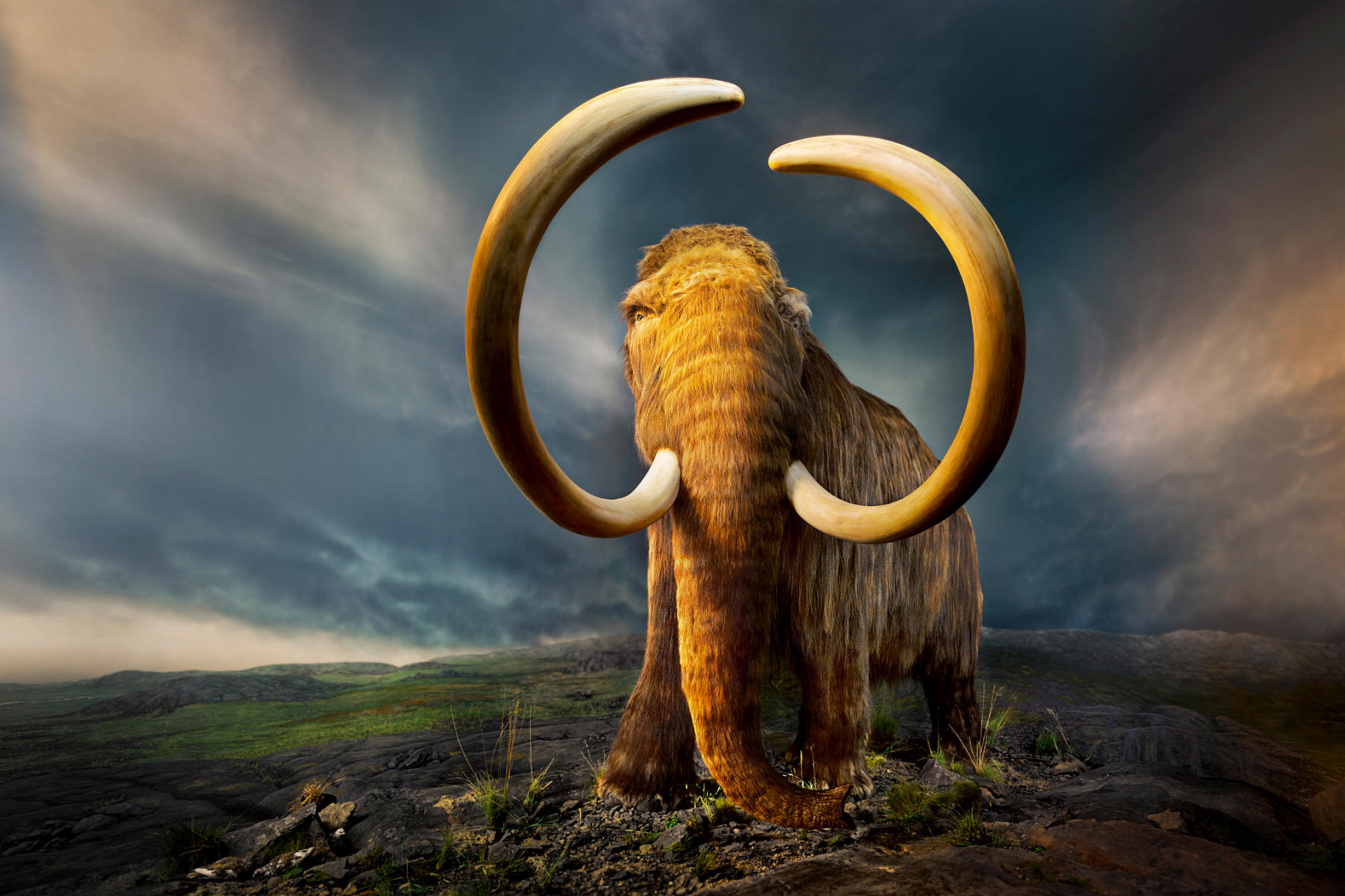
Woolly Mammoth,
Royal BC Museum, Victoria, British Columbia
Credit: Stephen Wilkes
for The New York Times
The Mammoth Cometh
Bringing extinct animals back to life is really happening
— and it’s going to be very, very cool.
Unless it ends up being very, very bad.
NYT
FEB. 27, 2014
https://www.nytimes.com/2014/03/02/
magazine/the-mammoth-cometh.html
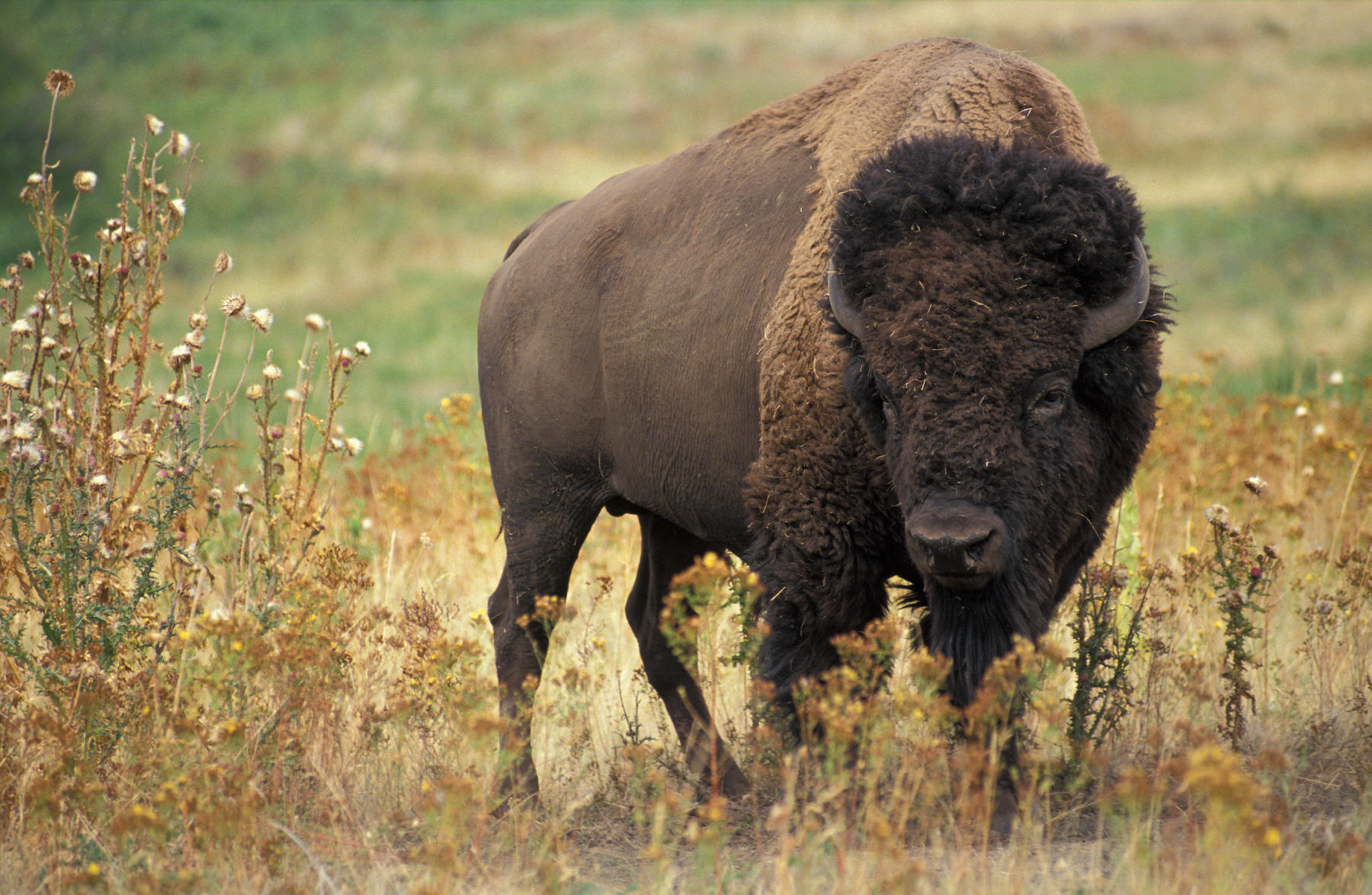
American bison / American buffalo
Wikipedia
http://upload.wikimedia.org/wikipedia/commons/8/8d/American_bison_k5680-1.jpg
http://en.wikipedia.org/wiki/File:American_bison_k5680-1.jpg
http://en.wikipedia.org/wiki/American_bison
biodiversity
UK
https://www.theguardian.com/environment/
biodiversity
https://www.theguardian.com/science/audio/2024/apr/16/
soundscape-ecology-a-window-into-a-disappearing-world-
podcast
https://www.theguardian.com/environment/2024/apr/16/
world-faces-deathly-silence-of-nature-as-wildlife-disappears-
warn-experts-aoe
https://www.theguardian.com/news/audio/2022/dec/14/
the-age-of-extinction-can-we-prevent-an-ecological-collapse-
podcast -
Guardian podcast
https://www.theguardian.com/environment/video/2022/dec/07/
the-five-ways-were-killing-nature-and-why-it-has-to-stop-video-explainer
https://www.theguardian.com/environment/2019/may/03/
climate-crisis-is-about-to-put-humanity-at-risk-un-scientists-warn
http://www.nytimes.com/2013/05/30/
opinion/ecology-lessons-from-the-cold-war.html
http://www.guardian.co.uk/environment/2010/may/21/
un-biodiversity-economic-report
biodiversity
USA
https://www.npr.org/2022/12/07/1140861347/
un-biodiversity-convention-aims-to-slow-humanitys-war-with-nature-
heres-whats-at
biodiversity
destruction UK
https://www.theguardian.com/news/audio/2022/dec/14/
the-age-of-extinction-can-we-prevent-an-ecological-collapse-
podcast -
Guardian podcast
environmental
destruction UK
https://www.theguardian.com/news/audio/2022/dec/14/
the-age-of-extinction-can-we-prevent-an-ecological-collapse-
podcast -
Guardian podcast
ecological collapse
UK
https://www.theguardian.com/news/audio/2022/dec/14/
the-age-of-extinction-can-we-prevent-an-ecological-collapse-
podcast -
Guardian podcast
loss of
biodiversity UK
https://www.theguardian.com/environment/video/2022/dec/07/
the-five-ways-were-killing-nature-and-why-it-has-to-stop-
video-explainer
drop USA
https://www.npr.org/2025/09/12/
nx-s1-5535551/insect-populations-human-interference-study
be on the decline
USA
https://www.npr.org/2025/09/12/
nx-s1-5535551/insect-populations-human-interference-study
biodiversity crisis UK
https://www.theguardian.com/environment/video/2022/dec/07/
the-five-ways-were-killing-nature-
and-why-it-has-to-stop-video-explainer - Guardian video
UN biodiversity report
2010 UK
http://www.guardian.co.uk/environment/2010/may/21/
un-biodiversity-economic-report
ecosystem
USA
https://www.npr.org/2025/08/05/
nx-s1-5449187/desert-tortoise
species UK
https://www.theguardian.com/environment/2019/may/03/
climate-crisis-is-about-to-put-humanity-at-risk-
un-scientists-warn
threatened species
threatened bird >
seabirds > USA >
Hawaii > Newell's shearwater
USA
https://www.npr.org/2020/01/04/
792730362/threatened-hawaiian-bird-strives-to-make-comeback
endangered species / animals UK
https://www.theguardian.com/environment/
endangeredspecies
https://www.npr.org/2025/08/05/
nx-s1-5449187/desert-tortoise
https://www.theguardian.com/news/audio/2024/feb/28/
from-the-archive-how-maverick-rewilders-are-trying-to-turn-back-the-tide-of-extinction-
podcast - Guardian podcast - first release in 2020
https://www.npr.org/2021/06/03/
1002612132/endangered-right-
whales-are-shrinking-scientists-blame-commercial-fishing-gear
https://www.theguardian.com/environment/2020/may/15/
endangered-species-day-a-photo-essay
http://www.guardian.co.uk/environment/2012/aug/05/
overseas-territories-wildlife-threatened
http://www.guardian.co.uk/science/2009/jun/25/
sharks-extinction-iucn-red-list
http://www.guardian.co.uk/environment/2008/dec/28/
wildlife-animals-conservation
http://www.theguardian.com/environment/2006/nov/02/
travelnews.science
http://www.theguardian.com/environment/2006/mar/28/
g2.conservationandendangeredspecies
endangered species / animals USA
https://www.npr.org/2025/08/05/
nx-s1-5449187/desert-tortoise
https://www.npr.org/2022/11/29/
1139665889/northern-long-eared-bat-endangered-white-nose
https://www.npr.org/sections/thetwo-way/2017/08/01/
541010111/great-lakes-gray-wolves-spot-safe-on-endangered-species-list-for-now
https://travel.nytimes.com/2011/05/15/
travel/endangered-species-travel-guide.html
endangered fungus >
fingers of willow gloves UK
https://www.theguardian.com/environment/2024/mar/26/
rare-fungus-willow-gloves-scotland-england-hopes-to-save-species
Eastern
Australia > endangered species > Koalas
USA
https://www.npr.org/2022/02/11/
1080081190/koalas-endangered-australia
endangered and extinct species USA
https://www.nytimes.com/topic/subject/
endangered-and-extinct-species
https://www.npr.org/2023/10/17/
1206664432/21-species-extinct-fish-wildlife-birds
Them and us:
endangered animals - in pictures
UK
25 May 2012
Many of the world's animals
are fast disappearing.
Perhaps, says Diane Ackerman,
Joel Sartore's majestic portraits
will help us not only feel
a greater kinship with other species,
but realise what's at stake
when the world's biodiversity
is allowed to shirink
dramatically
http://www.guardian.co.uk/environment/gallery/2012/may/25/
animals-wildlife-photographs
England's threatened species by region
UK
March 2010
http://www.guardian.co.uk/environment/interactive/2010/mar/11/
england-lost-threatened-species
doomed species
UK
https://www.theguardian.com/environment/2023/may/14/
london-zoo-team-save-doomed-species-rewilding-socorro-dove-wild
a disappearing world
> nature loss UK
https://www.theguardian.com/science/audio/2024/apr/16/
soundscape-ecology-a-window-into-a-disappearing-world-
podcast
vanish
USA
https://www.nytimes.com/2019/09/19/
science/bird-populations-america-canada.html
species > go extinct
USA
https://www.npr.org/2024/12/06/
nx-s1-5218583/how-many-species-could-go-extinct-from-climate-change-
it-depends-on-how-hot-it-gets
https://www.nytimes.com/interactive/2019/04/16/
climate/glaciers-melting-alaska-washington.html
extinct UK
http://www.guardian.co.uk/environment/2008/dec/14/
birdlovers-split-reintroduction-sea-eagle
exctinct animal
USA
http://www.nytimes.com/2014/03/02/
magazine/the-mammoth-cometh.html
extinct
in the wild UK
https://www.theguardian.com/environment/2023/may/14/
london-zoo-team-save-doomed-species-rewilding-socorro-dove-wild
be threatened
with extinction UK
http://www.guardian.co.uk/environment/2007/nov/12/
conservation.wildlife
on the brink of extinction
UK
https://www.theguardian.com/environment/2006/jul/21/
conservationandendangeredspecies.internationalnews
driven to extinction
extinct species
UK
http://www.guardian.co.uk/environment/2010/mar/11/
extinct-species-england
extinction
UK
https://www.theguardian.com/environment/series/
the-age-of-extinction
https://www.reuters.com/video/
watch/idRW942816062026RP1/?chan=hp-us-2024-01-04 - June 16, 2026
https://www.theguardian.com/news/audio/2022/dec/14/
the-age-of-extinction-can-we-prevent-an-ecological-collapse-
podcast -
Guardian podcast
https://www.theguardian.com/books/2020/aug/24/
vesper-flights-by-helen-macdonald-review-
towards-the-sixth-extinction
https://www.theguardian.com/news/audio/2024/feb/28/
from-the-archive-
how-maverick-rewilders-are-trying-to-turn-back-the-tide-of-extinction-
podcast - podcast released in 2020
http://www.theguardian.com/environment/2013/nov/26/
iucn-red-list-endangered-species-extinction
http://www.theguardian.com/environment/2013/sep/29/
scottish-wildcat-extinction-by-stealth
extinction
USA
https://www.nytimes.com/2021/09/28/
climate/endangered-animals-extinct.html
http://www.nytimes.com/2016/03/13/
opinion/sunday/the-global-solution-to-extinction.html
mass
extinction USA
https://www.nytimes.com/2020/06/01/
science/mass-extinctions-are-accelerating-scientists-report.html
sixth mass extinction
USA
https://www.nytimes.com/2017/07/11/
climate/mass-extinction-animal-species.html
http://www.nytimes.com/2014/02/16/
books/review/the-sixth-extinction-by-elizabeth-kolbert.html
http://www.newyorker.com/magazine/2009/05/25/
the-sixth-extinction
species at risk of
annihilation UK
https://www.theguardian.com/environment/2019/may/03/
climate-crisis-is-about-to-put-humanity-at-risk-
un-scientists-warn
biological
annihilation USA
https://www.nytimes.com/2017/07/11/
climate/mass-extinction-animal-species.html
wild species at risk UK
http://www.theguardian.com/environment/gallery/2016/may/25/
do-you-know-your-wild-species-at-risk-in-pictures
The noughties: a decade of lost species
UK
http://www.guardian.co.uk/environment/gallery/2009/oct/21/
decade-lost-species
England's lost species by region > Interactive
map UK 2010
The biggest national study of threats to
biodiversity
highlights around 500 species of flora and fauna
that have been lost completely from England.
Still more species
are becoming extinct by region.
http://www.guardian.co.uk/environment/interactive/2010/mar/11/
england-lost-threatened-species
kill off
die out
USA
https://www.npr.org/2025/08/05/
nx-s1-5449187/desert-tortoise
wipe out
UK
http://www.guardian.co.uk/environment/2010/jun/06/
tide-oil-wipes-out-pelican
http://www.theguardian.com/environment/2007/mar/25/
conservation.theobserver
(be)
wiped out
USA
https://www.theguardian.com/environment/2022/oct/13/
almost-70-of-animal-populations-wiped-out-since-1970-
report-reveals-aoe
Almost
70% of animal populations
wiped
out since 1970, report reveals UK
Huge
scale of human-driven loss of species
demands
urgent action,
say
world’s leading scientists
https://www.theguardian.com/environment/2022/oct/13/
almost-70-of-animal-populations-wiped-out-since-1970-
report-reveals-aoe
endangered habitats
UK
https://www.theguardian.com/environment/
endangered-habitats
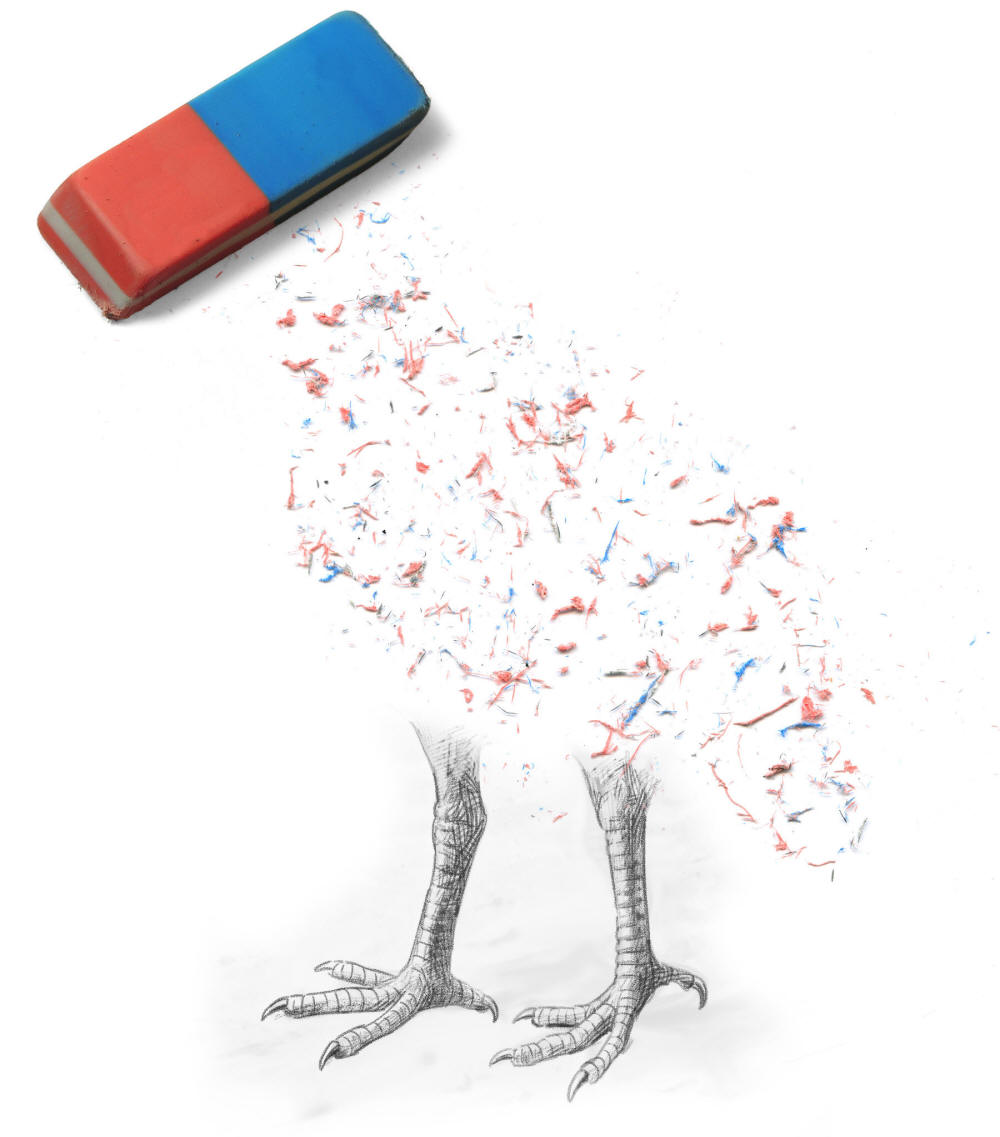
Illustration: Christoph Niemann
Without a Trace
‘The Sixth Extinction,’ by Elizabeth Kolbert
By
AL GORE
NYT
FEB. 10, 2014
https://www.nytimes.com/2014/02/16/
books/review/the-sixth-extinction-by-elizabeth-kolbert.html
conservation UK
https://www.theguardian.com/environment/
conservation
http://www.guardian.co.uk/science/2009/jun/25/
sharks-extinction-iucn-red-list
conservationist UK
https://www.theguardian.com/environment/2023/may/14/
london-zoo-team-save-doomed-species-rewilding-socorro-dove-wild
http://www.guardian.co.uk/environment/2011/jun/26/
salmon-numbers-leap
Environment Agency UK
https://www.gov.uk/government/organisations/
environment-agency
http://www.theguardian.com/environment/2006/aug/03/
conservationandendangeredspecies.uknews
World Wide Fund WWF
UK
https://www.theguardian.com/environment/
wwf
http://www.theguardian.com/environment/2006/oct/10/
pollution.conservation
CITES
(the Convention on International Trade
in Endangered Species
of
Wild Fauna and Flora)
is an international agreement
between governments.
Its aim is to ensure that international trade
in specimens of wild animals and plants
does not threaten their survival.
https://cites.org/eng/disc/what.php
conservationist > Lawrence Anthony
UK
http://www.guardian.co.uk/environment/2009/feb/22/
lawrence-anthony-conservationist
save N from extinction
UK
http://www.guardian.co.uk/environment/2010/oct/27/
the-decline-of-the-eel
rewilders
UK
https://www.theguardian.com/news/audio/2024/feb/28/
from-the-archive-
how-maverick-rewilders-are-trying-to-turn-back-the-tide-of-extinction-
podcast
conservationists’ hopes of rewilding captive species
UK
https://www.theguardian.com/environment/2023/may/14/
london-zoo-team-save-doomed-species-rewilding-socorro-dove-wild
environmentalist > Roger Deakin UK
http://www.guardian.co.uk/environment/2008/oct/25/
roger-deakin-environmentalist-nature-diary
ecologists UK
http://www.guardian.co.uk/environment/2013/jan/29/
hedgehog-population-dramatic-decline
naturalist > David Attenborough UK
https://www.theguardian.com/tv-and-radio/
david-attenborough
https://www.theguardian.com/tv-and-radio/2020/dec/12/
david-attenborough-the-earth-and-its-oceans-are-finite-
we-need-to-show-mutual-restraint
https://www.theguardian.com/commentisfree/2020/sep/26/
why-david-attenborough-is-the-doomsayer-we-still-adore
https://www.theguardian.com/film/2020/sep/25/
david-attenborough-a-life-on-our-planet-review-climate-emergency-documentary
https://www.theguardian.com/environment/2020/sep/18/
dont-look-away-now-are-viewers-finally-ready-for-the-truth-about-nature-aoe
https://www.theguardian.com/world/video/2020/jul/09/
sir-david-attenborough-appeal-save-zsl-london-whipsnade-zoos-charity-video
https://www.theguardian.com/books/2020/may/28/
david-attenborough-climate-crisis-a-life-on-our-planet
https://www.theguardian.com/environment/video/2019/dec/30/
its-nice-to-meet-you-
greta-thunberg-and-david-attenborough-speak-over-skype-video
https://www.theguardian.com/tv-and-radio/2019/oct/27/
seven-worlds-one-planet-review-
david-attenborough-breathtaking-moving-harrowing
http://www.guardian.co.uk/tv-and-radio/2012/oct/26/
richard-attenborough-climate-global-arctic-environment
http://www.guardian.co.uk/tv-and-radio/2012/may/05/
david-attenborough-bbc-series
http://www.guardian.co.uk/tv-and-radio/2010/oct/31/
david-attenborough-feature-readers-questions
protected species
USA
https://www.nytimes.com/topic/subject/
endangered-and-extinct-species
rewild UK
https://www.theguardian.com/news/audio/2020/dec/29/
revisited-otters-badgers-and-orcas-can-the-pandemic-help-rewild-britain-
podcast
- Guardian podcast
Corpus of news articles
Earth > Wildlife > Biodiversity,
Conservation, Extinction
A
Coast-to-Coast Guide
to Endangered Species
May 13,
2011
The New York Times
By BRYN NELSON
THE whoosh
of a surfacing orca and the glower of a mother grizzly still have the power to
raise goose bumps; a soaring California condor can yet astonish. But chances to
admire many of our wildlife neighbors are becoming increasingly uncommon.
Invasive buffelgrass is crowding out saguaros and other native cactuses
throughout the Southwest, while melting sea ice is threatening the Pacific
walrus and polar bear in Alaska. Mosquito-borne diseases are threatening
Hawaii’s songbirds, and white-nose syndrome is wiping out bats in the East.
Even so, the nation brims with natural wonders and a treasure trove of diverse
plants and animals. Conserved parklands, including our national parks and
wildlife preserves and their state and local counterparts, provide bulwarks
against further habitat loss and offer some of the best viewing opportunities
for these rarities.
Some federally protected species, like the northern spotted owl and gray wolf,
have become symbols of bitter political divides. Others, like the bald eagle and
American bison, have regained their status as emblems of national pride. Nearly
all can inspire travelers to go well out of their way to see, to hear or to
experience something truly marvelous.
Here is a sampling of the wildlife that can be found. Animals and plants
identified in boldface are either among the nearly 1,400 endangered or
threatened species or populations, or among the 260 candidates waiting to be
listed under the Endangered Species Act.
Northeast
Sandy soils and the coastal influence of the North Atlantic have fashioned a
range of unique habitats here, from Maine’s blueberry barrens to New Jersey’s
“pygmy forest” of dwarf pitch pine and scrub oak. Some natural wonders have
already vanished, like the sea mink hunted to extinction in the 19th century.
But visitors may still glimpse the increasingly rare New England cottontail
rabbit in tangled thickets or the wetland-dwelling bog turtle and ringed
boghaunter, an orange-striped dragonfly among the rarest in North America.
Two destinations better known for their beaches host a particularly impressive
roster of coastal-dwelling curiosities. Wildlife is recolonizing Cape Cod
National Seashore (nps.gov/caco), meaning increased sightings of weasel-like
fishers, American oystercatchers and a booming population of seals. The seals,
in turn, have attracted great white sharks to what amounts to a sandbar
smorgasbord.
A springtime bonanza of plankton can lure endangered North Atlantic right whales
to within spotting distance, while summer rains bring the reclusive eastern
spadefoot toads from their burrows for an evening of frenzied mating in the
Province Lands’ vernal pools. Protective mesh fences mark the well-camouflaged
nesting sites of one of the region’s biggest natural attractions, the threatened
piping plover.
Likewise positioned along the Atlantic migratory flyway, Fire Island National
Seashore is prime birding territory in the spring and fall along the
32-mile-long barrier island. The piping plover and the endangered roseate tern
breed here every year; plovers can sometimes be seen darting along the beach.
Visitors to Sailors Haven can stroll the boardwalk through the dune-protected
sunken forest, marked by American holly trees up to 300 years old and tangles of
wild grape, greenbrier and other vines. The threatened seabeach amaranth, a
low-growing, waxy-leaved plant with reddish stems, sprouts intermittently above
the high tide line. Edible beach plums blanket the dunes’ backsides, and
insectivorous plants like sundews grow farther inland in the low, moist soils.
Southeast
As more temperate climes give way to a tropical Caribbean influence, the seasons
here compress into wet and dry; the continent ends in a confluence of wetlands
and warm coastal waters. Habitats critical to the survival of many species are
becoming worn around the edges, however, from the Mississippi River delta to
Florida’s mangroves and the barrier islands of the Carolinas. For some regional
icons, like the ivory-billed woodpecker, it may already be too late. But
conservation efforts are helping other species hang on, such as the Tennessee
purple coneflower, the Mississippi gopher frog and the Louisiana black bear.
One of the nation’s best-known wetlands and a historical trail provide prime
access to the region’s untamed southern living.
Everglades National Park (nps.gov/ever), the largest remaining subtropical
wilderness in the United States, is actually a patchwork of habitats extending
from the outskirts of suburban Miami to Florida’s Gulf Coast. With a
half-million acres underwater, the park claims the biggest protected mangrove
forest in the Western Hemisphere as well as the continent’s most extensive stand
of sawgrass prairie.
Shark River Slough, a “slow-moving river of grass” that ambles southward at 100
feet a day, is a dominant feature. Here, river otters snack on baby alligators
while marsh rabbits venture out for a swim. The Cape Sable seaside sparrow — the
“Goldilocks bird” — forages in the slough’s just-right marsh prairie, while the
equally rare wood stork nests near the Shark Valley Visitor Center off Highway
41. Binocular-equipped hikers sometimes spot greater flamingoes during high tide
from the end of Snake Bight Trail, north of the Flamingo Visitor Center, while
right outside the center American crocodiles frequent Florida Bay’s brackish
waters. The nearby Flamingo Marina is a good place to see the Florida manatee in
winter, especially from a canoe or kayak; bottlenose dolphins frolic farther out
in the sun-splashed bay. With an estimated population of less than 100 in all of
South Florida, the Florida panther is far more elusive; most of the tawny
wildcat’s prime habitat lies north of Interstate 75 in Big Cypress National
Preserve (nps.gov/bicy).
Combining history with wildlife, the Natchez Trace National Parkway
(nps.gov/natr) wends its way across 444 miles and three state lines: an
800-foot-wide ribbon of green with a roadway running through it from the
foothills of the Appalachians in Tennessee to the bluffs of Natchez, Miss. Duck
River, which flows along the parkway near milepost 404, supports a rich
diversity of fish and mussels. Ruby-throated hummingbirds feast on orange
jewelweed nectar near Rock Spring.
In 2003, biologists cheered the first confirmed sighting of small brown
Mitchell’s satyr butterflies in the park, in wetlands dominated by sedges
between mileposts 290 and 302. Black Belt prairie near Tupelo, with its loamy
soil and chalky substrate, nourishes more than 400 plant species and abundant
birds. Along the Pearl River watershed near milepost 125, patient observers may
spot a petite ringed map turtle basking on fallen trees in the river,
identifiable by the yellow rings decorating its bony carapace. And between
mileposts 85 and 87, cautious drivers can catch sight of rare Webster’s
salamanders crossing the road en masse after winter rains as they head from
foraging grounds on limestone outcroppings to ephemeral breeding pools.
Midwest
Great Lakes, big rivers and meandering streams cover the nation’s midsection,
including nearly 12,000 lakes in Minnesota alone. Together, these bodies of
water harbor the highest diversity of freshwater mollusks in the world, an
impressive collection imperiled by habitat degradation and the invasive zebra
mussel. Dozens of species, including the acorn ramshorn, are presumed extinct.
Others have made a comeback, with thousands of bald eagles spending their
winters on the Mississippi. But survival is tenuous for natives like the Indiana
bat, Kirtland’s warbler and nearly two-foot-long Ozark hellbender salamander.
Two parks hugging the Lake Michigan shoreline provide a rich sampling of the
Midwest’s other varied inhabitants.
Near the tip of the “little finger” on the Michigan mitt, Sleeping Bear Dunes
National Lakeshore (nps.gov/slbe) offers sweeping views of Lake Michigan, the
famous Dune Climb and nesting sites for the endangered Great Lakes population of
piping plovers. Spiky-leafed Pitcher’s thistle occupies the open dunes, and the
delicate yellow-bloomed Michigan monkey-flower rises up from flowing springs of
inland lakes. Elusive bobcats, snowshoe hares and northern flying squirrels
populate the night. South Manitou Island reveals one of the region’s best
natural bouquets of springtime wildflowers, an old-growth grove of giant
northern white cedars and a dozen species of orchid.
At the southern tip of Lake Michigan, prickly pear cactuses grow beside Arctic
bearberry along the Indiana Dunes National Lakeshore (nps.gov/indu). In
midsummer, visitors hiking along the Inland Marsh Trail might glimpse the
inchlong Karner blue butterfly feeding on nectar in an exceedingly rare black
oak savanna, the largest such ecosystem in the nation. A true sphagnum moss bog
adds unexpected diversity to a park featuring more than 1,100 plant species.
Pitcher’s thistle grows here too, and piping plovers ply the sandy beaches.
Migratory birds, including merlins and short-eared owls, use the shoreline of
Lake Michigan as a navigational aid to reach their winter roosts.
Great Plains
The prairie has lent its name to a long list of flora and fauna: the western
prairie fringed orchid and the prairie mole cricket make their homes here, as do
both the greater and lesser prairie-chicken. Wild grasslands, though, are far
from monolithic, with wet and dry, hill and savanna, tall and short varieties,
each sheltering its own assemblage of life. Natural wildfires have been a part
of the prairie’s lifecycle for millenniums, but the landscape is now one of
North America’s most human-altered, challenging the resilience of species like
the statuesque whooping crane and little Topeka shiner.
Some bastions of grasslands remain, including one set atop a remarkable
labyrinth of limestone.
Below Wind Cave National Park (nps.gov/wica) in South Dakota, the world’s
fourth-longest cave system extends in a maze of passageways filled with boxwork,
frostwork and popcorn formations that occupy more than 135 miles. Above ground,
a sea of grass gives way to vanilla-scented ponderosa pines. The resident bison
herd, repopulated from 14 animals housed at the Bronx Zoo in 1913, numbers about
400 now and shares the grasslands with reintroduced elk and pronghorn antelope.
Black-tailed prairie dog towns, including one at Bison Flats, less than a
half-mile from the visitors’ center, are magnets for the black-footed ferret, a
major predator. Observant tourists on evening walks may spot one of the roughly
four dozen ferrets reintroduced to the park in 2007 and 2010 peering back at
them from a conquered prairie dog den. The prairie dog towns also attract
thirteen-lined ground squirrels, prairie rattlesnakes and prairie falcons. The
star lily’s snow-white petals and the jewel-toned American rubyspot damselfly
appear like fragile grace notes, while hikers may see spirited dance
competitions among groups of male sharp-tailed grouse in April or May as they
vie to impress a mate.
Rocky Mountains
A rugged spine running up the continent from northern New Mexico through
northern Montana into Canada, the Rocky Mountains form a natural dividing line
for wildlife: white-tailed deer predominate to the east, while mule deer rule
the west. Deer and other game have supported stealthy predators like the North
American wolverine and Canada lynx, though the mountains have drawn their share
of more destructive predation as well. Blister rust, an introduced fungal
disease, is laying waste to increasingly rare whitebark pines; the invasive
banded elm bark beetle is felling elms already weakened by drought or Dutch elm
disease.
For a bit of comic relief, it’s hard to beat the elaborate courtship strut of
the greater sage-grouse, while breathtaking beauty lies in one destination that
still survives virtually intact.
With its million-plus acres of nearly pristine wilderness, Glacier National Park
(nps.gov/glac) is a haven for grazing ungulates: moose and elk, bighorn sheep
and mountain goats. Rarely seen gray wolves furtively hunt their prey. Tourists
have a better chance of spotting one of the park’s roughly 300 grizzly bears
from the Many Glacier Valley or Logan Pass trails (group outings are highly
recommended, as is bear spray).
In this hiker’s paradise, tall white tufts of lilylike beargrass bloom
unpredictably every three to seven years. The more bear-favored yellow glacier
lilies cover hillsides high above turquoise glacial lakes like Grinnell and
Cracker. Floating trumpet-shaped water howellia flowers grace the margins of
wetlands linked to ephemeral kettle ponds. Bald eagles soar amid the peaks,
American pikas scurry in the high country, and bull trout spawn in streams
below. The park’s 25 glaciers are themselves endangered, expected to vanish well
before 2030 if warming trends continue.
Southwest
The sun-baked Southwest might seem an inhospitable environment, but its
astonishingly varied habitats host an array of plants and animals adapted to
steep mountains and canyons, sere deserts and vast flatlands. The iconic great
roadrunner still races throughout the region. Other indigenous species, like the
desert tortoise and the enormous Colorado pikeminnow, have seen their home
ranges shrink precipitously, and natives like the Mexican gray wolf and the
California condor, both reintroduced in the 1990s, face uncertainty.
Big Bend National Park (nps.gov/bibe) encapsulates the seeming contradiction of
a harsh desert teeming with life. The largest protected swath of Chihuahuan
Desert in the United States, the 800,000-acre Big Bend borders the Rio Grande in
southwestern Texas and rises in elevation from less than 2,000 feet to nearly
8,000 feet. The park’s aerial menagerie is unsurpassed in the nation, with
confirmed sightings of more than 450 bird species, 180 butterfly species and 20
species of bat.
Birders can spy on a pair of nesting common black-hawks by Rio Grande Village,
glimpse the only Colima warblers north of Mexico and even spot a black-capped
vireo in the transition zone between mountain woodlands and desert. On the
ground, visitors logged 175 sightings of mountain lions last year. More than 50
cactus species dot the desert with vivid blooms every spring, including the
diminutive pink-fringed Chisos Mountain hedgehog cactus in the low open desert.
In the summer, Mexican long-nosed bats stir at twilight to feed on the nectar of
blooming century plants; in the fall, male tarantulas in search of mates cross
the roads, their eyes shining diamond blue in the night.
Northwest
Vast evergreen forests end abruptly at the rugged Northwest coastline and the
bracing waters of the North Pacific. In Alaska, the cold is not nearly enough to
halt the melting of sea ice critical for polar bear survival, and humans are
increasingly disturbing the arctic tundra habitat of the yellow-billed loon.
Elimination of the northern spotted owl’s old-growth forest habitat through
logging has spawned bitter political battles; meanwhile, the last known Tacoma
pocket gophers were killed by domestic cats. Some endemic species remain in
scattered pockets, like the giant Palouse earthworm, which can grow to more than
three feet in length; the coastal meadow-dwelling Oregon silverspot butterfly;
and the reddish-gray northern Idaho ground squirrel.
In Washington, the largest unmanaged herd of Roosevelt elk in the nation roams
the impossibly green Hoh and Quinault rain forests of Olympic National Park
(nps.gov/olym), where annual precipitation can be 12 to 14 feet. Record-setting
Sitka spruce and western red cedar (their circumferences can reach 60 feet) are
standouts in a forest of giants; when toppled, they can be swept out to sea
along the peninsula’s 10 major rivers and then washed ashore as gargantuan
pieces of driftwood.
From the viewing platform at Salmon Cascades on the Sol Duc River, visitors can
see coho salmon jumping in October, while chinook salmon reaching up to 70
pounds will soon spawn freely up the Elwha River upon completion of an extensive
dam removal project. Migrating gray whales can be spotted in March and April
along Rialto or Kalaloch Beaches, though you will have to go a bit farther north
to Lime Kiln Point State Park to see killer whales, or orcas. Native animals
like the Olympic chipmunk frequent the edges of the national park’s subalpine
forests; the increasingly rare Olympic marmot inhabits the backcountry. Hikers
willing to become intimately familiar with tide charts may even spy sea otters
lolling in secluded coves along the coastline and Steller sea-lions hauled out
on the offshore rocks.
West
Within the seismically active Ring of Fire, the West has been shaken by
volcanoes and earthquakes but tempered by the Pacific. The lovely western lily
clings to the northern coast, while the fork-tailed California least tern visits
the southern beaches during the summer breeding season. Inland, the Great Basin
bristlecone pines of Inyo National Forest are among the most ancient living
things in the world, with many dated to more than 4,000 years old.
Thousands of miles across the Pacific, Hawaii’s volcanic soils have nourished an
exotic profusion of endemic plants and animals. Dozens of species have already
succumbed to threats from the mainland, but hothouse wonders remain, including
more than 30 types of the protected haha plants and the blind Kauai cave wolf
spider.
Golden Gate National Recreation Area (nps.gov/goga), the nation’s largest urban
park, also has among the highest number of endangered plant and animal species.
Teeming tidal pools and more than 100 sea caves stud the rocky California coast,
where brown pelicans dive for dinner. Harbor seals and California sea lions haul
out at Point Bonita Cove as well as at Sea Lion Cove at Point Reyes National
Seashore (nps.gov/pore), about 55 miles to the north. The San Francisco garter
snake and its favorite meal, the California red-legged frog, haunt the wetlands
at Mori Point in Pacifica. Colossal redwoods dominate Muir Woods National
Monument, while fog-shrouded grassland, maritime chaparral and coastal scrubland
adapted to the distinctive Mediterranean climate accommodate a remarkable
assortment of endangered plants. Presidio clarkia, a delicate lavender-pink
evening primrose relative, has taken to the harsh mineral soil above the parking
lot at Inspiration Point in the Presidio in San Francisco. Stonecrop plants
sustain the San Bruno elfin butterfly, whose larvae are tended by ant au pairs,
and silver lupines nourish the iridescent mission blue butterfly.
Hawaii Volcanoes National Park (nps.gov/havo) boasts living marvels found
nowhere else on earth. Visitors can spot a showy Kamehameha butterfly by mamaki
trees, and admire one of Hawaii Island’s rarest plants, the hibiscuslike hau
kuahiwi; it was rescued from the brink of extinction by decades of painstaking
propagation, and now greets visitors by trail sign 11 in Kipuka Puaulu (Bird
Park). In all, the park hosts 26 endangered or threatened endemic plant species,
including the Mauna Loa silversword.
Five rare or critically endangered types of honeycreeper songbird persist at
higher altitudes, where they can evade mosquito-borne diseases. Hawaiian petrels
nest in lava tubes high on the slopes of Mauna Loa, while flocks of nene
(Hawaiian geese) honk as they pass overhead in the early morning and early
evening. Solitary Hawaiian monk seals rest on remote beaches, and backcountry
hikers may spot a hawksbill sea turtle nesting at Keauhou, Halape or Apua Point
from July through September.
10 Species Near Extinction
ALABAMA CAVEFISH (Speoplatyrhinus poulsoni)
Confined to underground pools in Key Cave National Wildlife Refuge, this rare
species is dependent on aquatic animals that feed on bat guano.
ALALA OR HAWAIIAN CROW (Corvus hawaiiensis)
The entire population survives in captive breeding programs at Keauhou Bird
Conservation Center and the Maui Bird Conservation Center in Hawaii.
BIG BEND GAMBUSIA (Gambusia gaigei)
A small fish reintroduced to three ponds in Big Bend National Park in Texas, its
main threats are habitat loss and predation by introduced sunfish and other
species.
COLUMBIA BASIN PYGMY RABBIT (Brachylagus idahoensis)
Conservationists are crossbreeding a small captive group with their close Idaho
relatives and gradually reintroducing the progeny to central Washington.
FLORIDA BONNETED BAT (Eumops floridanus)
It persists in scattered roosts in South Florida, threatened by habitat loss and
pesticides.
FRANCISCAN MANZANITA (Arctostaphylos hookeri ssp. franciscana)
A lone plant was spotted near the Golden Gate Bridge in 2009 and was relocated
to a more secure site.
MIAMI BLUE BUTTERFLY (Hemiargus thomasi ssp. bethunebakeri)
Scattered individuals are found within Key West National Wildlife Refuge in
Florida. Loss of coastal habitat, insecticides and poaching are threats.
OHA WAI (Clermontia peleana)
Presumed extinct for 90 years, this flowering plant was rediscovered in the
Kohola Mountains of Hawaii. Seeds are being collected for propagation.
RED WOLF (Canis rufus)
Driven to the brink by overhunting and habitat fragmentation, this wolf has a
wild population of about 100 in northeastern North Carolina.
WYOMING TOAD (Anaxyrus baxteri)
A fungal disease and predation have nearly wiped out the toad’s tiny population
in two counties. Captive breeding programs are trying to save it.
A Coast-to-Coast Guide to Endangered Species,
NYT,
13.5.2011,
https://www.nytimes.com/2011/05/15/
travel/endangered-species-travel-guide.html
Polar Bear
Is Made a Protected Species
May 15, 2008
The New York Times
By FELICITY BARRINGER
The polar bear, whose summertime Arctic hunting grounds have been greatly
reduced by a warming climate, will be placed under the protection of the
Endangered Species Act, Interior Secretary Dirk Kempthorne announced on
Wednesday.
But the long-delayed decision to list the bear as a threatened species may prove
less of an impediment to oil and gas industries along the Alaskan coast than
many environmentalists had hoped. Mr. Kempthorne also made it clear that it
would be “wholly inappropriate” to use the listing as a tool to reduce
greenhouse gases, as environmentalists had intended to do.
While giving the bear a few new protections — hunters may no longer import hides
or other trophies from bears killed in Canada, for instance — the Interior
Department added stipulations, seldom used under the act, that would allow oil
and gas exploration and development to proceed in areas where the bears live, as
long as the companies continue to comply with existing restrictions under the
Marine Mammal Protection Act.
Mr. Kempthorne said Wednesday in Washington that the decision was driven by
overwhelming scientific evidence that “sea ice is vital to polar bears’
survival,” and all available scientific models show that the rapid loss of ice
will continue. The bears use sea ice as a platform to hunt seals and as a
pathway to the Arctic coasts where they den. The models reflect varying
assumptions about how fast the concentration of greenhouse gases in the
atmosphere will increase.
In prepared remarks, the secretary, who earlier in his political life was a
strong opponent of the current Endangered Species Act, added, “This has been a
difficult decision.” He continued, “But in light of the scientific record and
the restraints of the inflexible law that guides me,” he made “the only decision
I could make.”
The Center for Biological Diversity, Greenpeace and the Natural Resources
Defense Council filed suit in 2005 to force a listing of the polar bear. The
center, based in Arizona, has been explicit about its hopes to use this — and
the earlier listing of two species of coral threatened by warming seas — as a
legal cudgel to attack proposed coal-fired power plants or other new sources of
carbon dioxide emissions.
But in both cases, the Bush administration has parried this legal thrust, saying
it had no obligation to address or try to mitigate the cause of the species’
decline — warming waters, in the case of the corals, or melting sea ice, in the
case of the bears — or the greenhouse-gas emissions from cars, trucks,
refineries, factories and power plants that contribute to both conditions.
On Wednesday, Mr. Kempthorne specifically ruled out that possibility, saying,
“When the Endangered Species Act was adopted in 1973, I don’t think terms like
‘climate change’ were part of our vernacular.”
The act, he said, “is not the instrument that’s going to be effective” to deal
with climate change.
Barton H. Thompson Jr., a law professor and director of the Woods Institute of
the Environment at Stanford University, said the decision reflected the
administration’s view that “there is no way, if your factory emits a greenhouse
gas, that we can say there is a causal connection between that emission and an
iceberg melting somewhere and a polar bear falling into the ocean.”
Few natural resource decisions have been as closely watched or been the subject
of such vehement disagreement within the Bush administration as this one,
according to officials in the Interior Department and others familiar with the
process.
After the department missed a series of deadlines, a federal judge ruled two
weeks ago that the decision had to be made by Thursday.
In recent days, some officials in the Interior Department speculated that the
office of Vice President Dick Cheney had tried to block the listing of the bear.
People close to these officials indicated that two separate documents — one
supporting the listing, and the other supporting a decision not to list the bear
— had been prepared for Mr. Kempthorne.
In an interview, Mr. Kempthorne and his chief of staff, Bryan Waidmann, said
they had not discussed the decision with anyone in the vice president’s office,
though they did not dispute that two documents had been made available for the
secretary’s signature this week.
“Let’s say I had my options available,” Mr. Kempthorne said.
The provision of the act that the Interior Department is using to lighten the
regulatory burden that the listing imposes on the oil and gas industry — known
as a 4(d) rule — was intended to permit flexibility in the management of
threatened species, as long as the chances of conservation of the species would
be enhanced, or at least not diminished.
Kassie Siegel, a lawyer for the Center for Biological Diversity, said the
listing decision was an acknowledgment of “global warming’s urgency” but would
have little practical impact on protecting polar bears.
“The administration acknowledges the bear is in need of intensive care,” Ms.
Siegel said. “The listing lets the bear into the hospital, but then the 4(d)
rule says the bear’s insurance doesn’t cover the necessary treatments.”
The science on polar bears in a warming climate is nuanced, which allowed the
administration to shape its decision the way it did. Over all, scientists agree
that rising temperatures will reduce Arctic ice and stress polar bears, which
prefer seals they hunt on the floes. But few foresee the species vanishing
entirely for a century and likely longer.
There are more than 25,000 bears in the Arctic, 15,500 of which roam within
Canada’s territory. A scientific study issued last month by a Canadian group
established to protect wildlife said that 4 of 13 bear populations would most
likely decline by more than 30 percent over the next 36 years, while the others
would remain stable or increase.
M. Reed Hopper of the Pacific Legal Foundation, a property-rights group based in
Sacramento, called the decision to list the polar bear “unprecedented” and said
his group would sue the Interior Department over the decision.
“Never before has a thriving species been listed” under the Endangered Species
Act, he said, “nor should it be.”
John Baird, the environment minister for Canada, said Wednesday that the
government would adopt an independent scientific panel’s recommendation to
declare polar bears a species “of special concern,” a lower designation than
endangered, and he promised to take other unspecified actions.
Management of the bear populations is the responsibility of Canadian provinces
and territories. The territorial government of Nunavut, which is home to upward
of 15,000 polar bears, had campaigned against new United States protections for
the bear, largely because of worries that the lucrative local bear hunts by
residents of the United States would stop when trophy skins could no longer be
brought home.
Andrew C. Revkin and Ian Austen contributed reporting.
Polar Bear Is Made a Protected Species,
NYT,
15.5.2008,
http://www.nytimes.com/2008/05/15/us/15polar.html
Editorial
Until All the Fish Are Gone
January 21, 2008
The New York Times
Scientists have been warning for years that overfishing is degrading the health
of the oceans and destroying the fish species on which much of humanity depends
for jobs and food. Even so, it would be hard to frame the problem more
dramatically than two recent articles in The Times detailing the disastrous
environmental, economic and human consequences of often illegal industrial
fishing.
Sharon LaFraniere showed how mechanized fishing fleets from the European Union
and nations like China and Russia — usually with the complicity of local
governments — have nearly picked clean the oceans off Senegal and other
northwest African countries. This has ruined coastal economies and added to the
surge of suddenly unemployed migrants who brave the high seas in wooden boats
seeking a new life in Europe, where they are often not welcome.
The second article, by Elisabeth Rosenthal, focused on Europe’s insatiable
appetite for fish — it is now the world’s largest consumer. Having overfished
its own waters of popular species like tuna, swordfish and cod, Europe now
imports 60 percent of what it consumes. Of that, up to half is contraband, fish
caught and shipped in violation of government quotas and treaties.
The industry, meanwhile, is organized to evade serious regulation. Big factory
ships from places like Europe, China, Korea and Japan stay at sea for years at a
time — fueling, changing crews, unloading their catch on refrigerated vessels.
The catch then enters European markets through the Canary Islands and other
ports where inspection is minimal. After that, retailers and consumers neither
ask nor care where the fish came from, or whether, years from now, there will be
any fish at all.
From time to time, international bodies try to do something to slow overfishing.
The United Nations banned huge drift nets in the 1990s, and recently asked its
members to halt bottom trawling, a particularly ruthless form of industrial
fishing, on the high seas. Last fall, the European Union banned fishing for
bluefin tuna in the eastern Atlantic and Mediterranean, where bluefin have been
decimated.
The institution with the most potential leverage is the World Trade
Organization. Most of the world’s fishing fleets receive heavy government
subsidies for boat building, equipment and fuel, America’s fleet less so than
others. Without these subsidies, which amount to about $35 billion annually,
fleets would shrink in size and many destructive practices like bottom trawling
would become uneconomic.
The W.T.O. has never had a reputation for environmental zeal. But knowing that
healthy fisheries are important to world trade and development, the group has
begun negotiating new trade rules aimed at reducing subsidies. It produced a
promising draft in late November, but there is no fixed schedule for a final
agreement.
The world needs such an agreement, and soon. Many fish species may soon be so
depleted that they will no longer be able to reproduce themselves. As 125 of the
world’s most respected scientists warned in a letter to the W.T.O. last year,
the world is at a crossroads. One road leads to tremendously diminished marine
life. The other leads to oceans again teeming with abundance. The W.T.O. can
help choose the right one.
Until All the Fish Are Gone, NYT, 21.1.2008,
http://www.nytimes.com/2008/01/21/opinion/21mon1.html
Op-Ed Contributor
The Vanishing Man of the Forest
January 6, 2007
The New York Times
By BIRUTE MARY GALDIKAS
ONCE again, I am driving, under the blazing
equatorial sun, down an uncomfortable, rutty relic of a road into the interior
of central Borneo. With me are two uniformed police men, one armed with a
machine gun. The landscape is bleak, no trees, no shade as far as the eye can
see. Our mission is to confiscate orangutan orphans whose mothers have been
killed as a result of the sweeping forest clearance taking place throughout
Borneo.
Many years ago, Louis Leakey, the great paleo-anthropologist whose work at
Olduvai Gorge and other sites in East Africa revolutionized our knowledge of
human origins, encouraged me to study wild orangutans — just as he had
encouraged Jane Goodall to study chimpanzees and Dian Fossey to study gorillas.
Later, he laughingly called us the “trimates,” or the three primates.
Orangutans are not as well known as chimpanzees and gorillas. But like their
African cousins, orangutans are great apes, our closest living relatives in the
animal kingdom, and the most intelligent animals, with the exception of humans,
to have evolved on land. Orangutans are reclusive, semi-solitary, quiet, highly
arboreal and red, facts that come as a surprise to some people. Their name is
derived from the Malay words “orang hutan,” which literally mean “person of the
forest.” And it is the orangutan’s profound connection to the forest that is
driving it to extinction.
Without forests, orangutans cannot survive. They spend more than 95 percent of
their time in the trees, which, along with vines and termites, provide more than
99 percent of their food. Two forests form their only habitat, and they are the
tropical rain forests of Borneo and Sumatra.
Sumatra is exclusively Indonesian, as is the two thirds of the island of Borneo
known as Kalimantan. That places 80 to 90 percent of the orangutan population,
which numbers only 40,000 to 50,000, in Indonesia, with the remainder in
Malaysian Borneo. What happens in Indonesia, particularly Kalimantan, will
determine the orangutan’s future.
When I first arrived in Central Kalimantan in 1971, orangutans were already
endangered because of poaching (for the pet trade and for the cooking pot) and
deforestation (by loggers and by villagers making way for gardens and rice
fields).
But it was all relatively small-time. The forests of Kalimantan were vast —
Indonesia’s are the second largest tropical rain forests in the world, after
Brazil’s — and forest conversion rates small. People still used axes and saws to
cut down trees and traveled by dugout canoes or small boats with inboard
engines.
I went straight to work, beginning a wild orangutan study that continues to this
day, and establishing an orangutan rehabilitation program, the first in
Kalimantan, which has returned more than 300 ex-captive orangutans to the wild.
But the wild is increasingly difficult to find. In the late 1980s, as it entered
the global economy, Indonesia decided to become a major producer and exporter of
palm oil, pulp and paper. Before this, the government had endorsed selective
logging. Now vast areas of forest were slated for conversion to plantations to
grow trees for palm oil and paper production. Monster-sized bulldozers,
replacing the chain saws of the early logging boom, tore up the forest,
clear-cutting as many as 250,000 acres at once for palm oil plantations.
At the same time, the price of wood, particularly the valuable hardwoods that
grow in Indonesia’s rain forests and fetch a high price on the black market,
increased. Illegal logging became rampant, even in national parks and reserves.
While illegal logging degrades the forest, plantations absolutely destroy it.
And the destruction is not only immediate, but also long-term. Forest-clearing
leaves huge amounts of dry branches and other wood litter on forest floors; a
small spark can ignite enormous forest fires, particularly in times of drought.
During the 1997 El Niño drought, approximately 25 million acres, an area about
half the size of Oklahoma, burned in Indonesia. Thousands of orangutans died.
Indonesia has achieved its goal of becoming one of the two largest palm-oil
producers and exporters in the world. But at what cost? At least half of the
world’s wild orangutans have disappeared in the last 20 years; biologically
viable populations of orangutans have been radically reduced in size and number;
and 80 percent of the orangutan habitat has either been depopulated or totally
destroyed. The trend shows no sign of abating: government maps of future planned
land use show more of the same, on an increasing scale.
•
We’re back in the jeep. The police view the trip inland as a success. They
confiscated five orangutans and one woman volunteered her crab-eating macaque,
an unprotected species. Two of the orangutan owners, both women, shed tears, but
we invited them to visit their “pets” at the Orangutan Foundation
International’s Care Center and Quarantine, where they will be rehabilitated and
eventually released to the wild.
I am pleased to think that five more orphan orangutans will once again feel the
branches and leaves under their feet as they swing through the trees. Yet I am
somewhat melancholy. The fragile forests that make orangutan life possible are
fast disappearing. Where, I wonder, are the billionaire philanthropists and the
international policies that will prevent orangutans — and all great apes — from
going extinct?
Indonesia is a vast, densely populated country where millions live in or near
poverty. The temptation to exploit natural resources to feed people today, never
mind tomorrow, and to expand the economy, is great. And the plantations are but
one example. Surface-mining of gold in the alluvial fans of white sand has been
practiced for two decades, leaving virtual moonscapes near the National Park
where I work. Now zircon mining has entrenched itself all over Central
Kalimantan, with each zircon mine obliterating 1,000 acres of rain forest. Two
years ago nobody, myself included, even knew what zircon was.
The international community must recognize that it has some responsibility for
what happens to the great rain forests of Indonesian Borneo. Foreign investment
in local development programs needs to be expanded. Village level projects, like
the one financed by the United States Agency for International Development and
run by Boston-based World Education near where I work, have empowered farmers,
strengthened village economies and employed local people, giving them a stake in
preserving the forest.
We need more of these programs. Indonesia could also impose a special tax on
companies that profit from rain forest destruction, with the revenues dedicated
to forest and orangutan conservation. Proper labeling of palm oil content could
allow a consumer boycott of soap, crackers, cookies and other products that
contain it. Finally, Indonesia needs to be more vigorous in enforcing the
excellent laws it already has to protect its forests.
When I arrived in 1971, Borneo was almost a Garden of Eden, the most remote
place on earth. Now it has been drawn into the global economy, one government
decision, one business plan at a time. But the destruction of Borneo’s forests
and the extinction of the orangutans are not inevitable. It is possible to
protect our ancient heritage and closest of kin — one orangutan, one national
park, one piece of irreplaceable forest at a time. We only need to decide to do
it.
Birute Mary Galdikas is president
and co-founder
of Orangutan Foundation
International
in Los Angeles
and a professor
at Simon Fraser University in
British Columbia.
The
Vanishing Man of the Forest,
NYT, 6.1.2007,
https://www.nytimes.com/2007/01/06/
opinion/06galdikas.html
Study Sees
‘Global Collapse’
of Fish
Species
November 3, 2006
The New York Times
By CORNELIA DEAN
If fishing around the world continues at its
present pace, more and more species will vanish, marine ecosystems will unravel
and there will be “global collapse” of all species currently fished, possibly as
soon as midcentury, fisheries experts and ecologists are predicting.
The scientists, who report their findings today in the journal Science, say it
is not too late to turn the situation around. As long as marine ecosystems are
still biologically diverse, they can recover quickly once overfishing and other
threats are reduced, the researchers say.
But improvements must come quickly, said Boris Worm of Dalhousie University in
Nova Scotia, who led the work. Otherwise, he said, “we are seeing the bottom of
the barrel.”
“When humans get into trouble they are quick to change their ways,” he
continued. “We still have rhinos and tigers and elephants because we saw a clear
trend that was going down and we changed it. We have to do the same in the
oceans.”
The report is one of many in recent years to identify severe environmental
degradation in the world’s oceans and to predict catastrophic loss of fish
species. But experts said it was unusual in its vision of widespread fishery
collapse so close at hand.
The researchers drew their conclusion after analyzing dozens of studies, along
with fishing data collected by the United Nations Food and Agricultural
Organization and other sources. They acknowledge that much of what they are
reporting amounts to correlation, rather than proven cause and effect. And the
F.A.O. data have come under criticism from researchers who doubt the reliability
of some nations’ reporting practices, Dr. Worm said.
Still, he said in an interview, “there is not a piece of evidence” that
contradicts the dire conclusions.
Jane Lubchenco, a fisheries expert at Oregon State University who had no
connection with the work, called the report “compelling.”
“It’s a meta analysis and there are challenges in interpreting those,” she said
in an interview, referring to the technique of collective analysis of disparate
studies. “But when you get the same patterns over and over and over, that tells
you something.”
But Steve Murawski, chief scientist of the Fisheries Service of the National
Oceanographic and Atmospheric Administration, said the researchers’ prediction
of a major global collapse “doesn’t gibe with trends that we see, especially in
the United States.”
He said the Fisheries Service considered about 20 percent of the stocks it
monitors to be overfished. “But 80 percent are not, and that trend has not
changed substantially,” he said, adding that if anything, the fish situation in
American waters was improving. But he conceded that the same cannot necessarily
be said for stocks elsewhere, particularly in the developing world.
Mr. Murawski said the Bush administration was seeking to encourage international
fishery groups to consider adopting measures that have been effective in
American waters.
Twelve scientists from the United States, Canada, Sweden and Panama contributed
to the work reported in Science today.
“We extracted all data on fish and invertebrate catches from 1950 to 2003 within
all 64 large marine ecosystems worldwide,” they wrote. “Collectively, these
areas produced 83 percent of global fisheries yields over the past 50 years.”
In an interview, Dr. Worm said, “We looked at absolutely everything — all the
fish, shellfish, invertebrates, everything that people consume that comes from
the ocean, all of it, globally.”
The researchers found that 29 percent of species had been fished so heavily or
were so affected by pollution or habitat loss that they were down to 10 percent
of previous levels, their definition of “collapse.”
This loss of biodiversity seems to leave marine ecosystems as a whole more
vulnerable to overfishing and less able to recover from its effects, Dr. Worm
said. It results in an acceleration of environmental decay, and further loss of
fish.
Dr. Worm said he analyzed the data for the first time on his laptop while he was
overseeing a roomful of students taking an exam. What he saw, he said, was “just
a smooth line going down.” And when he extrapolated the data into the future “to
see where it ends at 100 percent collapse, you arrive at 2048.”
“The hair stood up on the back of my neck and I said, ‘This cannot be true,’ ”
he recalled. He said he ran the data through his computer again, then did the
calculations by hand. The results were the same.
“I don’t have a crystal ball and I don’t know what the future will bring, but
this is a clear trend,” he said. “There is an end in sight, and it is within our
lifetimes.”
Dr. Worm said a number of steps could help turn things around.
Even something as simple as reducing the number of unwanted fish caught in nets
set for other species would help, he said. Marine reserves would also help, he
said, as would “doing away with horrendous overfishing where everyone agrees
it’s a bad thing; or if we banned destructive fishing in the most sensitive
habitats.”
Josh Reichert, who directs the environmental division of the Pew Charitable
Trusts, called the report “a kind of warning bell” for people and economies that
depend on fish.
But predicting a global fisheries collapse by 2048 “assumes we do nothing to fix
this,” he said, “and shame on us if that were to be the case.”
Study
Sees ‘Global Collapse’ of Fish Species,
NYT,
3.11.2006,
https://www.nytimes.com/2006/11/03/
science/03fish.html
Explore more on these topics
Anglonautes > Vocapedia
Earth > wildlife
Earth > climate change, global warming
Earth > geography,
animals, wildlife,
endangered and extinct species,
resources,
agriculture / farming, gardening,
population, waste, pollution,
global warming, climate change,
weather, extreme weather, disasters,
climate action, activists
|